

Dry Needling vs Medical Acupuncture vs Chinese Acupuncture
Understanding the Difference — and Which Treatment Is Right for Your Pain
Many patients ask us: “What’s the difference between dry needling and acupuncture?”
While these treatments may look similar, they are very different in philosophy, precision, and effectiveness—especially for muscle and joint pain.
Below, we explain the key differences between dry needling, medical acupuncture, and traditional Chinese acupuncture, and why dry needling is often the preferred option for musculoskeletal pain and movement problems.
What Is Dry Needling?
Dry needling is a modern, evidence-based treatment performed by licensed healthcare professionals such as physical therapists. It is designed specifically to treat muscle pain, trigger points, and movement dysfunction.
How Dry Needling Works
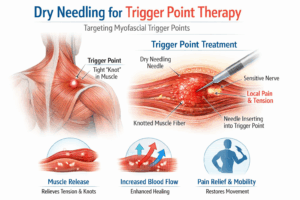
Dry needling targets myofascial trigger points—tight, painful knots within muscles that can restrict motion and cause local or referred pain. Using a thin, sterile needle, the clinician directly treats the affected muscle to:
-
Release muscle tension
-
Improve blood flow and healing
-
Normalize muscle activation
-
Reduce pain and stiffness
-
Restore normal movement
Why Patients Choose Dry Needling
-
✔ Highly precise and targeted
-
✔ Often provides fast pain relief
-
✔ Ideal for sports injuries, chronic pain, and postural issues
-
✔ Based on anatomy, biomechanics, and modern research
-
✔ Works seamlessly with physical therapy and rehabilitation
Dry needling focuses on treating the source of pain, not just the symptoms.
What Is Medical Acupuncture?
Medical acupuncture is a Western adaptation of traditional acupuncture, performed by healthcare providers using modern medical principles.
How Medical Acupuncture Works
-
Combines needle use with Western anatomy and neurophysiology
-
Aims to reduce pain by stimulating nerves and releasing endorphins
-
May use both local and distant needle placement
Limitations Compared to Dry Needling
While medical acupuncture can help with pain modulation, it is often:
-
Less specific to deep muscular trigger points
-
Less focused on restoring movement and function
-
Slower to produce results for mechanical pain conditions
What Is Traditional Chinese Acupuncture?
Traditional Chinese acupuncture is based on principles of Traditional Chinese Medicine (TCM) and has been practiced for thousands of years.
How Chinese Acupuncture Works
This approach is centred on restoring balance to the body’s energy, known as Qi, which flows through pathways called meridians. Needles are placed at specific points to support overall balance and wellness.
When Chinese Acupuncture May Help
-
Stress management
-
General wellness
-
Relaxation and sleep support
Limitations for Pain & Injury Care
-
Not anatomically or biomechanically driven
-
Does not directly target muscular trigger points
-
Less effective for sports injuries, movement restrictions, or joint pain
Comparing the Three Approaches
| Feature | Dry Needling | Medical Acupuncture | Chinese Acupuncture |
|---|---|---|---|
| Approach | Modern Western medicine | Western + traditional | Traditional Chinese Medicine |
| Primary Focus | Muscle trigger points | Nervous system & pain | Energy balance |
| Precision | ⭐⭐⭐⭐⭐ | ⭐⭐⭐ | ⭐⭐ |
| Best For | Pain, injuries, mobility | Pain modulation | Wellness |
| Speed of Results | Fast | Moderate | Gradual |
| Rehab Integration | Excellent | Limited | Minimal |
Why Our Clinic Favours Dry Needling
For patients with neck pain, back pain, headaches, sports injuries, or chronic muscle tension, dry needling consistently delivers the best results because it:
-
Targets the root cause of pain
-
Produces measurable improvements in movement
-
Often reduces pain in fewer sessions
-
Complements corrective exercises and hands-on therapy
Dry needling is not a standalone “quick fix”—it’s a powerful tool within a comprehensive treatment plan designed to get you moving and feeling better.
Who Is a Good Candidate for Dry Needling?
Dry needling is commonly used for:
-
Neck and low back pain
-
Shoulder, hip, and knee pain
-
Muscle strains and overuse injuries
-
Headaches and migraines related to muscle tension
-
Postural pain from desk work or repetitive activity
Your clinician will determine if dry needling is appropriate for you based on a full evaluation.
Choosing the Right Treatment
Although dry needling and acupuncture both use needles, they are not interchangeable treatments.
If your goal is:
-
✔ Targeted pain relief
-
✔ Improved mobility and function
-
✔ Faster recovery
-
✔ Care grounded in modern science
Dry needling is often the most effective choice for musculoskeletal pain.

Ready to See If Dry Needling Is Right for You?
Schedule an evaluation with one of our licensed clinicians to determine the best treatment approach for your condition.
👉 book an appointment via the booking link
👉 Essex Osteo