
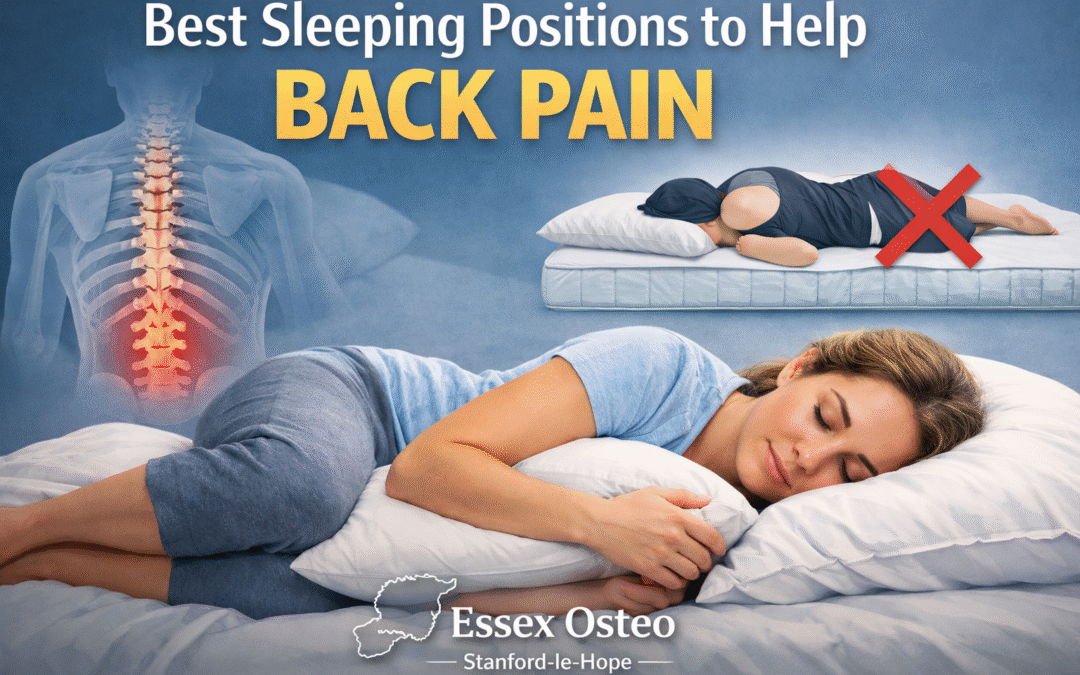
Best Sleeping Positions to Help Back Pain
Advice from Essex Osteo
Back pain is one of the most common reasons patients visit our osteopathic clinic in Stanford-le-Hope. Many people don’t realise that how you sleep can either help your back pain recover — or make it worse.
At Essex Osteo, we regularly advise patients on simple changes they can make at home to support their treatment, and sleeping position is one of the most important (and overlooked) factors.
In this article, we’ll explain the best sleeping positions for back pain, what to avoid, and how osteopathic treatment can help if pain is disrupting your sleep.
Why Sleeping Position Matters for Back Pain
You spend around one third of your life asleep, which means your spine is under load for several hours every night. Poor sleeping posture can:
-
Increase lower back pain
-
Aggravate neck and shoulder tension
-
Contribute to stiffness in the morning
-
Slow down recovery from injury
A good sleeping position helps keep your spine neutral and supported, reducing strain on muscles, joints and ligaments.
Best Sleeping Positions for Back Pain
1. Sleeping on Your Back (Supine Position)
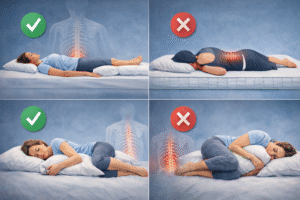
Sleeping on your back is often the best position for spinal alignment, especially for lower back pain.
How to optimise it:
-
Use a supportive pillow that keeps your neck neutral
-
Place a pillow under your knees to reduce arching in the lower back
This position evenly distributes body weight and reduces pressure on the spine.
2. Sleeping on Your Side
Side sleeping is very common and can be excellent for back pain if done correctly.
Tips for side sleepers:
-
Place a pillow between your knees to keep hips aligned
-
Use a pillow that supports your neck so your head doesn’t drop forward
-
Keep your ears, shoulders and hips in a straight line
This position is particularly helpful for people with lower back pain, sciatica or pregnancy-related discomfort.
3. Fetal Position (With Modifications)
The fetal position can help relieve pressure on the spine, especially for disc-related issues.
Avoid curling too tightly, as this can restrict breathing and cause stiffness. A pillow between the knees is still recommended.
Sleeping Positions to Avoid if You Have Back Pain
Sleeping on Your Stomach
Stomach sleeping is generally the worst position for back and neck pain because it:
-
Forces the neck to rotate for long periods
-
Increases strain on the lower back
-
Disrupts spinal alignment
If you struggle to change this habit, placing a pillow under your pelvis may reduce strain — but we usually recommend retraining yourself to sleep on your side.
Choosing the Right Pillow and Mattress
Your sleeping position works hand-in-hand with your mattress and pillow.
General guidance:
-
Medium-firm mattresses suit most people with back pain
-
Pillows should support your neck, not push it forward
-
Side sleepers usually need a thicker pillow than back sleepers
If you wake up stiff or sore, your bedding may be part of the problem.
How Osteopathy Can Help Back Pain and Sleep
If back pain is affecting your sleep, osteopathic treatment can help by:
-
Improving spinal mobility
-
Reducing muscle tension
-
Addressing joint restrictions
-
Providing personalised posture and sleep advice
At our Stanford-le-Hope osteopathic clinic, we don’t just treat symptoms — we look at how your daily habits, including sleep, contribute to pain.
Back Pain Treatment in Stanford-le-Hope, Essex
If you’re struggling with back pain, neck pain or poor sleep, professional advice can make a real difference.
Essex Osteo provides osteopathic treatment for patients in:
-
Stanford-le-Hope
-
Corringham
-
Grays
-
Thurrock
-
Surrounding areas of Essex
We tailor treatment and self-care advice to help you feel better — both during the day and at night.
Book an Appointment
If back pain is disrupting your sleep, don’t ignore it. Early treatment can prevent symptoms becoming long-term.
📍 Essex Osteo – Osteopath in Stanford-le-Hope, Essex
📞 Contact us today to book an appointment or to find out how osteopathy can help your back pain and sleep quality.