
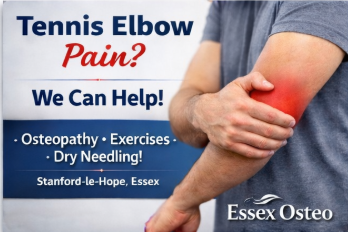
Tennis Elbow: Causes, Best Exercises, and How Osteopathy & Dry Needling Can Help in Stanford-le-Hope, Essex
Tennis elbow, clinically known as lateral epicondylitis, is a common cause of elbow pain that affects far more people than just tennis players. At Essex Osteo, we regularly treat patients from Stanford-le-Hope and surrounding areas who are struggling with persistent elbow pain affecting work, sport, and daily life.
This article explains what tennis elbow is, the best exercises for recovery, and how osteopathic treatment and dry needling can speed up healing and reduce pain.
What Is Tennis Elbow?
Tennis elbow develops when the tendons on the outside of the elbow become overloaded and irritated. This usually happens due to repetitive wrist and forearm movements rather than a single injury.
Common Causes Include:
-
Repetitive gripping or lifting
-
Manual work (builders, tradespeople, mechanics)
-
Office and computer work
-
Racquet sports or gym training
-
Poor wrist or shoulder mechanics
Typical Symptoms:
-
Pain or burning on the outer elbow
-
Weak grip strength
-
Pain when lifting, gripping, or twisting
-
Symptoms that worsen over time if untreated
If you’re experiencing these symptoms in Stanford-le-Hope or Essex, early treatment can prevent long-term problems.
Best Exercises for Tennis Elbow Recovery
Exercise plays a key role in tendon healing. The goal is to restore strength, flexibility, and load tolerance without aggravating symptoms.
1. Wrist Extensor Stretch
-
Straighten your arm with palm facing down
-
Gently bend the wrist using the opposite hand
-
Hold for 20–30 seconds
-
Repeat 3–4 times
Benefits: Reduces tension through the irritated tendon.
2. Eccentric Wrist Extension
-
Rest your forearm on a table, hand hanging over the edge
-
Hold a light weight
-
Use your other hand to lift the wrist up
-
Slowly lower it down under control
Benefits: Proven to stimulate tendon repair and resilience.
3. Grip Strengthening
-
Squeeze a soft ball or rolled towel
-
Hold for 5 seconds
-
Repeat 10–15 times
Benefits: Improves functional strength without overloading the elbow.
⚠️ Exercises should be pain-controlled, not pain-free. A mild discomfort is normal, sharp pain is not.
How Osteopathic Treatment Helps Tennis Elbow
At Essex Osteo in Stanford-le-Hope, osteopathic treatment looks beyond the elbow itself.
Osteopathy Can Help By:
-
Reducing strain through the elbow, wrist, shoulder, and neck
-
Improving joint mobility and circulation
-
Addressing posture and work-related loading patterns
-
Supporting faster healing of irritated tendons
Treatment may include soft tissue work, joint mobilisation, and tailored exercise advice — all specific to your lifestyle and job demands.

The Benefits of Dry Needling for Tennis Elbow
Dry needling is an effective technique often used alongside osteopathy for stubborn or long-standing tennis elbow.
Dry Needling Can:
-
Reduce muscle tension in the forearm
-
Improve local blood flow
-
Calm pain sensitivity
-
Speed up recovery when exercise alone isn’t enough
Many patients in Stanford-le-Hope and Essex notice improved movement and reduced pain after just a few sessions.
Why Choose Essex Osteo in Stanford-le-Hope?
✔ Experienced osteopathic care
✔ Evidence-based exercise rehab
✔ Dry needling for faster pain relief
✔ Individualised treatment plans
✔ Convenient location for Stanford-le-Hope & Essex residents
We focus on long-term results, not just short-term symptom relief.
Book an Appointment for Tennis Elbow Treatment in Essex
If elbow pain is affecting your work, sport, or daily activities, professional treatment can make a real difference. Early intervention leads to better outcomes and faster recovery.
📍 Clinic: Essex Osteo
📍 Location: Stanford-le-Hope, Essex
Get in touch today to book your osteopathic assessment and start your recovery.
Frequently Asked Questions About Tennis Elbow
What is the fastest way to heal tennis elbow?
The fastest way to heal tennis elbow is a combination of load management, specific exercises, and manual treatment. At Essex Osteo, we often combine osteopathic treatment, progressive rehabilitation exercises, and dry needling to reduce pain and restore function more quickly than rest alone.
Do tennis elbow exercises really work?
Yes — when done correctly and consistently. Exercises such as eccentric wrist strengthening and stretching help stimulate tendon repair and improve resilience. However, doing the wrong exercises or progressing too quickly can delay recovery, which is why guided rehab is recommended.
Should I rest completely with tennis elbow?
Complete rest is rarely the best solution. While aggravating activities should be reduced, gentle loading through the tendon is essential for healing. An osteopath can advise you on how to modify work, sport, and daily activities safely.
Can osteopathy help tennis elbow?
Absolutely. Osteopathy helps by:
-
Reducing strain on the elbow and forearm
-
Improving movement in the wrist, shoulder, and neck
-
Addressing posture and repetitive loading patterns
-
Supporting tendon healing and pain reduction
Many patients in Stanford-le-Hope find osteopathy particularly effective when pain has lasted more than a few weeks.
Is dry needling good for tennis elbow?
Dry needling is highly effective for tennis elbow, especially when muscle tension and trigger points are contributing to pain. It can:
-
Reduce pain sensitivity
-
Improve blood flow
-
Release tight forearm muscles
-
Speed up recovery alongside exercise
It is commonly used as part of a combined treatment plan at Essex Osteo.
How long does tennis elbow take to heal?
Recovery time varies depending on severity and how early treatment starts.
-
Mild cases: 6–8 weeks
-
Moderate cases: 3–6 months
-
Long-standing cases: may take longer without treatment
Early assessment by an osteopath can significantly shorten recovery time.
Can tennis elbow come back?
Yes, if the underlying cause isn’t addressed. Recurrence is more likely if:
-
Work or sport technique doesn’t change
-
Strength and conditioning are not restored
-
Posture and movement patterns are ignored
Osteopathic treatment focuses on preventing recurrence, not just relieving symptoms.
When should I see an osteopath for tennis elbow?
You should seek treatment if:
-
Pain lasts longer than 1–2 weeks
-
Grip strength is weakening
-
Pain is affecting work or sleep
-
Self-management hasn’t helped
Early treatment leads to better long-term outcomes.
Do I need a GP referral to see an osteopath in Essex?
No — you can book directly with Essex Osteo in Stanford-le-Hope, Essex without a GP referral.