
Sinus Tarsi Syndrome: Symptoms, Treatment and Exercises | Osteopath in Stanford-le-Hope
Persistent pain on the outside of the ankle can make walking, running, and everyday activities uncomfortable. One commonly overlooked cause of this pain is sinus tarsi syndrome, a condition affecting the small space between the ankle bones known as the sinus tarsi.
At Essex Osteo, we frequently assess and treat patients with sinus tarsi syndrome in Stanford-le-Hope and across Essex. Using a combination of osteopathic treatment, hands-on therapy, and targeted rehabilitation exercises, we help restore ankle stability and reduce long-term pain.
If you are experiencing chronic ankle pain after a sprain or instability in the ankle, understanding sinus tarsi syndrome and how it can be treated is the first step towards recovery.
What Is Sinus Tarsi Syndrome?
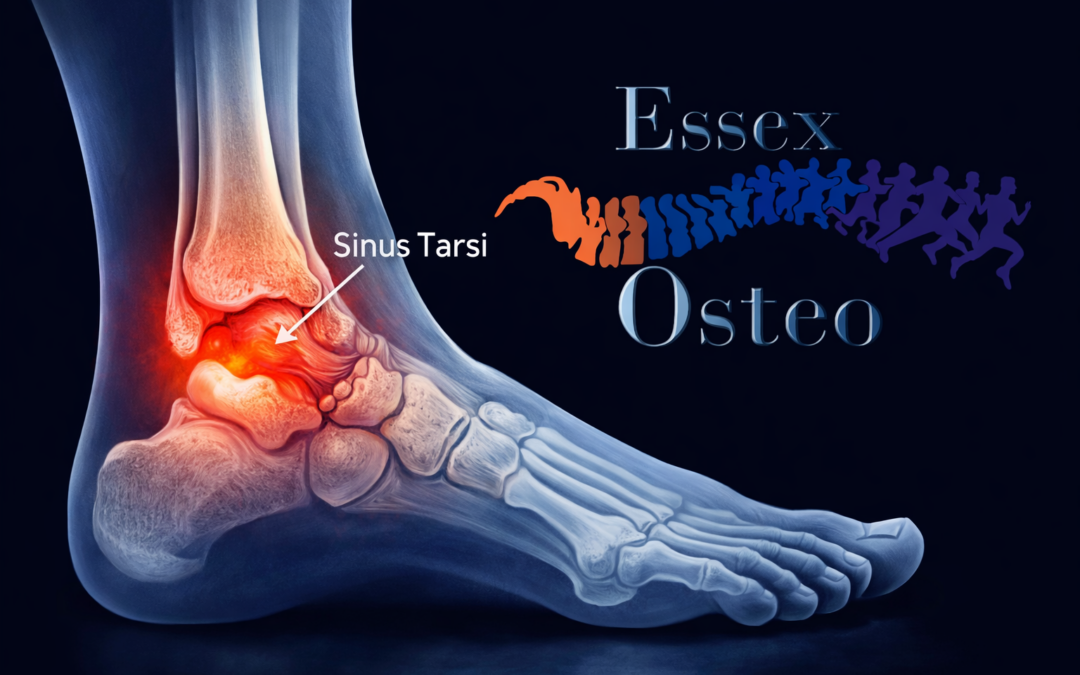
The sinus tarsi is a small canal located on the outer side of the foot between two important bones: the talus and the calcaneus (heel bone). This space contains ligaments, blood vessels, fat tissue, and nerve endings that help provide stability and proprioception to the subtalar joint.
Sinus tarsi syndrome occurs when inflammation or irritation develops in this space, often following injury or repeated stress on the ankle.
When this area becomes inflamed, it can lead to:
- Pain on the outer side of the ankle
- A feeling of instability or the ankle “giving way”
- Difficulty walking on uneven surfaces
- Tenderness when pressing into the sinus tarsi
- Pain during running, walking or prolonged standing
Many people develop the condition after an ankle sprain that never fully healed, which is why it is frequently seen in people with chronic ankle instability.
Causes of Sinus Tarsi Syndrome
Several factors can contribute to the development of sinus tarsi syndrome.
1. Previous Ankle Sprains
The most common cause is a history of ankle sprains, particularly lateral ankle sprains. When the ligaments are damaged, the subtalar joint can become unstable, leading to irritation within the sinus tarsi.
2. Foot Biomechanics
People with flat feet (overpronation) place increased pressure on the subtalar joint. This altered movement pattern can compress or irritate the sinus tarsi.
3. Repetitive Stress
Activities such as running on uneven terrain, football, trail running or court sports can repeatedly stress the outer ankle structures.
4. Poor Ankle Stability
Weakness in the muscles around the ankle, particularly the peroneal muscles, can contribute to instability and recurrent irritation.
At Essex Osteo in Stanford-le-Hope, we assess these contributing factors through movement analysis, gait assessment, and musculoskeletal examination.
Symptoms of Sinus Tarsi Syndrome
Symptoms can vary from mild discomfort to persistent ankle pain.
Common symptoms include:
- Pain on the outside of the ankle
- Tenderness when pressing into the sinus tarsi
- Difficulty walking on uneven ground
- A feeling that the ankle is unstable
- Pain during running or sport
- Stiffness or discomfort after activity
Patients often report that their ankle never felt the same after a sprain, which is a key clinical clue.
How Osteopathic Treatment Can Help
Osteopathy focuses on restoring joint mobility, muscle balance, and movement efficiency.
At Essex Osteo, our osteopaths in Stanford-le-Hope take a holistic approach to ankle pain, addressing both the symptoms and underlying causes of sinus tarsi syndrome.
Osteopathic treatment may include:
Joint Mobilisation
Gentle mobilisation techniques help restore normal movement to the subtalar joint, ankle joint, and surrounding foot structures.
Improving joint mobility reduces pressure in the sinus tarsi and improves function.
Soft Tissue Therapy
Treatment of tight or overactive muscles including:
- Calf muscles
- Peroneal muscles
- Tibialis posterior
- Plantar fascia
Reducing muscular tension can improve foot mechanics and decrease ankle strain.
Biomechanical Assessment
An osteopath will assess:
- Walking and gait mechanics
- Foot posture
- Load distribution
- Ankle stability
This helps identify why the injury occurred and how to prevent recurrence.
Rehabilitation and Strengthening
Exercises are prescribed to improve:
- Ankle stability
- Proprioception
- Foot strength
- Lower limb control
This is crucial for long-term recovery.
Lifestyle and Activity Advice
Patients are also given guidance on:
- Activity modification
- Training progression
- Footwear choices
- Injury prevention strategies
At Essex Osteo, our aim is not just to relieve pain but to help patients return safely to sport and daily activity.
Best Exercises for Sinus Tarsi Syndrome
Rehabilitation exercises are an important part of recovery from sinus tarsi syndrome. These exercises improve strength, stability, and ankle control.
1. Ankle Alphabet
This gentle mobility exercise helps restore movement in the ankle.
How to perform:
- Sit with your leg extended.
- Lift the foot slightly off the floor.
- Use your foot to draw the letters of the alphabet in the air.
Perform 1–2 sets daily.
2. Resistance Band Eversion
This exercise strengthens the peroneal muscles, which stabilise the outer ankle.
Steps:
- Sit with legs extended.
- Loop a resistance band around the forefoot.
- Turn the foot outward against the resistance.
- Slowly return to the starting position.
Perform 3 sets of 12–15 repetitions.
3. Single Leg Balance
This exercise improves proprioception and ankle stability.
Steps:
- Stand on the affected leg.
- Slightly bend the knee.
- Hold for 30 seconds.
Progressions include:
- Closing the eyes
- Standing on a cushion
- Performing small movements with the free leg
Perform 3–4 repetitions daily.
4. Heel Raises
Heel raises strengthen the calf muscles and ankle stabilisers.
Steps:
- Stand with feet hip-width apart.
- Slowly raise the heels off the ground.
- Hold briefly at the top.
- Lower slowly.
Perform 3 sets of 10–15 repetitions.
Self-Management Tips for Sinus Tarsi Syndrome
In addition to treatment and exercise, some simple strategies may help manage symptoms:
- Rest from aggravating activities
- Apply ice after activity if the ankle is inflamed
- Wear supportive footwear
- Avoid uneven surfaces during early recovery
- Gradually increase activity levels
- Perform strengthening exercises regularly
If symptoms persist beyond a few weeks, professional assessment is recommended.
Osteopathy for Sinus Tarsi Syndrome in Stanford-le-Hope
If you are experiencing ongoing ankle pain, instability, or difficulty returning to sport, a professional assessment can help determine whether sinus tarsi syndrome is the underlying cause.
At Essex Osteo, we provide osteopathic treatment in Stanford-le-Hope for ankle injuries, sports injuries, and chronic foot pain. Our goal is to restore movement, reduce pain, and help you return to normal activity as quickly as possible.
Through hands-on osteopathic treatment, rehabilitation exercises, and personalised care, many patients experience significant improvement in ankle stability and function.
If you are searching for an osteopath in Stanford-le-Hope for ankle pain or sinus tarsi syndrome, Essex Osteo can help guide you through recovery.
Frequently Asked Questions About Sinus Tarsi Syndrome
What does sinus tarsi syndrome feel like?
Sinus tarsi syndrome usually causes pain on the outside of the ankle, particularly when walking on uneven ground. Many people also experience a feeling that the ankle is unstable or may give way.
Can sinus tarsi syndrome heal on its own?
Mild cases can improve with rest and rehabilitation exercises. However, persistent symptoms often require professional treatment such as osteopathy, physiotherapy, or targeted rehabilitation to restore ankle stability.
How long does sinus tarsi syndrome take to recover?
Recovery time varies depending on the severity of the injury. Many people improve within 4–8 weeks with appropriate treatment and exercises, although long-standing cases may take longer.
Is walking good for sinus tarsi syndrome?
Gentle walking is usually safe if it does not aggravate symptoms. However, uneven terrain, running, or high-impact activities should be limited during early recovery.
Can osteopathy help sinus tarsi syndrome?
Yes. Osteopathic treatment can help by improving ankle mobility, reducing muscle tension, correcting biomechanical issues, and guiding rehabilitation exercises. This combined approach can improve stability and reduce recurring ankle pain.
When should I see an osteopath for ankle pain?
You should consider seeing an osteopath if:
- Your ankle pain persists for more than 2–3 weeks
- The ankle frequently feels unstable
- Pain returns when you try to exercise
- The injury is affecting daily activities
Early assessment can help prevent long-term ankle instability.
Book an Osteopathy Appointment in Stanford-le-Hope
If you are struggling with ankle pain, instability, or sinus tarsi syndrome, professional assessment and treatment can help speed up recovery.
At Essex Osteo, we provide expert osteopathic treatment in Stanford-le-Hope for a wide range of musculoskeletal conditions including ankle sprains, foot pain, and sports injuries.
Our approach combines hands-on treatment, rehabilitation exercises, and movement assessment to help you return to activity safely and confidently.
Contact Essex Osteo today to book an appointment and start your recovery.
<script type=”application/ld+json”>
{
“@context”: “https://schema.org”,
“@type”: “MedicalBusiness”,
“name”: “Essex Osteo”,
“image”: “https://yourwebsite.co.uk/images/essex-osteo-logo.png”,
“url”: “https://yourwebsite.co.uk”,
“telephone”: “+44”,
“address”: {
“@type”: “PostalAddress”,
“addressLocality”: “Stanford-le-Hope”,
“addressRegion”: “Essex”,
“addressCountry”: “UK”
},
“areaServed”: [
“Stanford-le-Hope”,
“Corringham”,
“Basildon”,
“Grays”,
“Thurrock”
],
“medicalSpecialty”: “Osteopathy”,
“description”: “Essex Osteo provides osteopathic treatment in Stanford-le-Hope for ankle pain, sports injuries, back pain and musculoskeletal conditions.”,
“priceRange”: “££”
}
</script>