
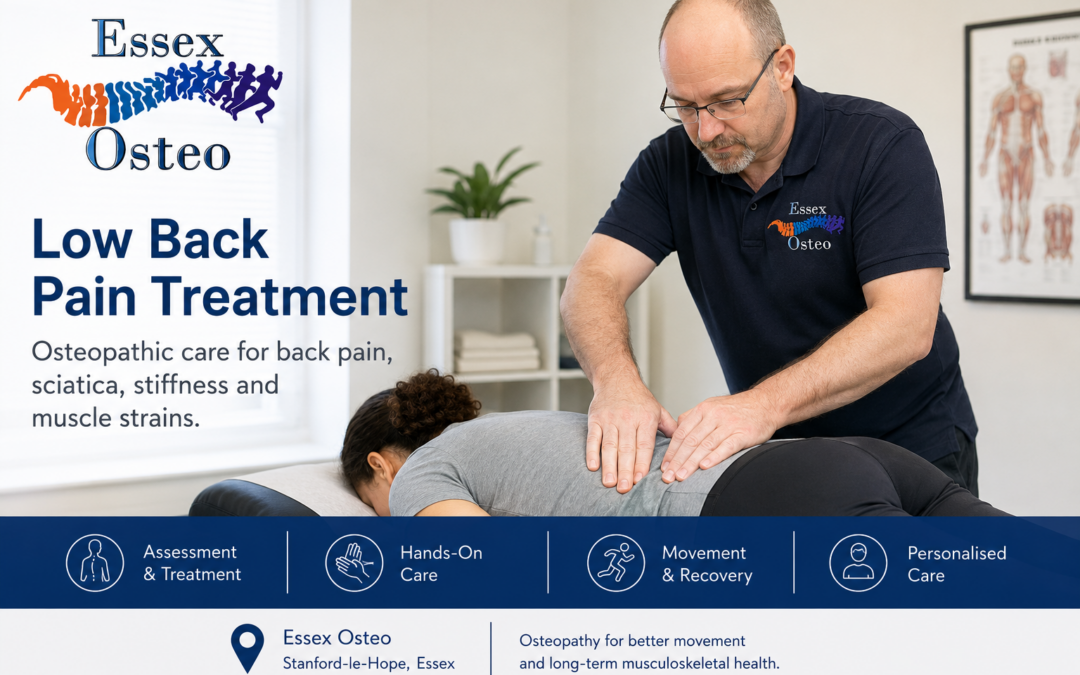
Low Back Pain Treatment in Stanford-le-Hope, Essex
Low back pain is one of the most common reasons people seek treatment at Essex Osteo in Stanford-le-Hope. In fact, most people will experience back pain at some point during their lives. While many episodes improve within a few weeks, some people develop persistent pain that affects work, sleep, exercise and everyday activities.
Whether your pain started after lifting something heavy, gardening, a sporting injury, prolonged sitting at a desk, or simply appeared without an obvious cause, identifying the reason behind your symptoms is the first step towards effective treatment.
At Essex Osteo, we provide comprehensive osteopathic assessments and personalised treatment plans to help relieve pain, restore movement and reduce the likelihood of your symptoms returning.
What Causes Low Back Pain?
Low back pain can develop for many different reasons. Sometimes it is caused by a single event, while in other cases it develops gradually over months or even years.
Common causes include:
- Muscle or ligament strain
- Joint stiffness and reduced spinal mobility
- Poor posture
- Prolonged sitting or driving
- Repetitive bending and lifting
- Sports injuries
- Heavy manual work
- Reduced physical activity
- Age-related changes within the spine
- Disc-related problems
- Arthritis affecting the spine
- Pregnancy-related changes
It is important to remember that imaging findings such as disc bulges or age-related degeneration do not always explain pain. Many people have changes visible on MRI scans without experiencing any symptoms. This is why a thorough clinical assessment is often far more valuable than relying on scans alone.
What Does Low Back Pain Feel Like?
Symptoms vary from person to person and may include:
- Aching across the lower back
- Sharp pain during movement
- Muscle tightness or spasms
- Difficulty bending forwards or standing upright
- Pain when sitting for long periods
- Morning stiffness
- Pain after exercise
- Pain spreading into the buttock or hip
- Pain travelling into the leg (sometimes called sciatica)
Some people experience only occasional discomfort, while others find their symptoms interfere with daily life.
When Should You Seek Professional Advice?
Many episodes of back pain settle within a few weeks. However, you should consider seeking assessment if:
- Pain lasts longer than two weeks
- Symptoms are becoming worse
- You are struggling with everyday activities
- Pain keeps returning
- You have difficulty working or exercising
- Pain spreads into the leg
- You are unsure what caused the problem
Early assessment can often prevent a short-term problem becoming persistent.
How Can Osteopathy Help Low Back Pain?
At Essex Osteo, treatment begins with a detailed assessment. We take time to understand:
- How your symptoms started
- Your medical history
- Your work and lifestyle
- Previous injuries
- Activities that aggravate or ease your pain
- Your goals for recovery
We then carry out a physical examination to assess movement, strength, flexibility, posture and joint function before discussing the findings with you.
Every treatment plan is tailored to the individual rather than using a “one size fits all” approach.
Depending on your needs, treatment may include:
- Gentle osteopathic techniques
- Joint mobilisation
- Soft tissue massage
- Muscle energy techniques
- Stretching
- Rehabilitation exercises
- Medical acupuncture (dry needling), where appropriate
- Postural advice
- Activity modification
- Advice on returning safely to work and sport
Our aim is not only to reduce your pain but also to improve movement, confidence and long-term spinal health.
The Importance of Staying Active
One of the biggest changes in back pain management over recent years is the understanding that prolonged rest is rarely the best option.
Research consistently shows that remaining as active as possible, within comfortable limits, usually leads to better recovery than staying in bed or avoiding movement altogether.
This doesn’t mean pushing through severe pain, but gradually returning to normal activities and performing appropriate exercises can help maintain mobility, reduce stiffness and improve recovery.
We guide every patient on what activities are safe and how to progress them confidently.
Preventing Future Episodes of Back Pain
Although no treatment can guarantee back pain will never return, there are many ways to reduce the risk.
Helpful strategies include:
- Regular physical activity
- Strengthening the core and hips
- Improving flexibility
- Taking breaks from prolonged sitting
- Using good lifting techniques
- Managing stress
- Maintaining a healthy body weight
- Addressing small problems before they become larger ones
Many patients also benefit from occasional maintenance treatment to keep joints moving well and identify minor issues before they become more significant.
Why Choose Essex Osteo?
Essex Osteo has been helping patients across Stanford-le-Hope, Corringham, Thurrock, Basildon and the surrounding Essex area since 1998.
When you visit us you can expect:
- Comprehensive osteopathic assessment
- Evidence-informed treatment
- Individual rehabilitation programmes
- Friendly, professional care
- Honest advice about your recovery
- Clear explanations without unnecessary jargon
- Treatment tailored to your lifestyle and goals
Our focus is on helping you move better, feel better and return to the activities that matter most to you.
Frequently Asked Questions
Can osteopathy help chronic low back pain?
Yes. Many people with long-standing back pain benefit from a combination of hands-on treatment, education, exercise and self-management strategies tailored to their individual needs.
Will I need a scan?
Not usually. Most cases of low back pain can be diagnosed through a detailed history and physical examination. If we believe further investigations are required, we will advise you accordingly.
How many treatments will I need?
This depends on the cause of your symptoms, how long you have had them and your individual goals. Some people improve within a few sessions, while others with more persistent problems may require a longer rehabilitation programme.
Can I continue exercising?
In many cases, yes. Remaining active is often beneficial. We will advise you on which activities are appropriate and whether any temporary modifications are needed.
Do you treat sciatica?
Yes. We assess people with leg pain, nerve-related symptoms and suspected sciatica to determine the most appropriate management and whether further medical investigation is required.
Book Your Low Back Pain Assessment
If you’re experiencing low back pain and are looking for an experienced osteopath in Stanford-le-Hope, Essex Osteo is here to help.
We provide personalised assessment, hands-on treatment, rehabilitation and practical advice to help you recover safely and confidently.
Whether your pain is new or something you’ve been living with for years, don’t let it stop you enjoying everyday life.
Contact Essex Osteo today to book your assessment and take the first step towards moving better, feeling better and living with less pain.
Frequently Asked Questions About Low Back Pain
1. Can an osteopath help with low back pain?
Yes. Osteopaths are trained to assess, diagnose and treat a wide range of musculoskeletal conditions, including low back pain. Treatment may involve hands-on techniques to improve joint mobility, reduce muscle tension and improve movement, alongside personalised rehabilitation exercises and practical advice. At Essex Osteo, every treatment plan is tailored to your symptoms, lifestyle and recovery goals.
2. What causes low back pain?
Low back pain can have many causes. Common examples include muscle strains, ligament injuries, joint stiffness, prolonged sitting, poor lifting technique, sporting injuries, repetitive movements and age-related changes within the spine. In many cases, there isn’t a single cause, and several factors such as reduced fitness, stress, sleep and work demands may contribute.
3. When should I seek treatment for back pain?
You should consider professional assessment if your back pain:
- Lasts longer than one to two weeks
- Is becoming worse rather than improving
- Keeps returning
- Is affecting your work, sleep or daily activities
- Spreads into your buttock or leg
- Makes walking or moving difficult
Early assessment can often help prevent acute back pain from becoming a long-term problem.
4. What happens during my first appointment?
Your initial consultation includes a detailed discussion about your symptoms, medical history, lifestyle, occupation and goals. This is followed by a physical examination assessing your posture, spinal movement, muscle strength, flexibility, neurological function and joint mobility. We’ll explain our findings, answer your questions and discuss the most appropriate treatment plan before beginning treatment if appropriate.
5. How many treatments will I need?
There isn’t a fixed number of treatments because every person is different. Some patients improve within two or three sessions, while others with more persistent or complex conditions may require a longer course of care. Following your assessment, we’ll provide an estimate of the expected treatment plan and regularly review your progress.
6. Is osteopathic treatment painful?
Treatment is generally gentle and should always be within your comfort levels. Some techniques may reproduce familiar symptoms or cause mild discomfort while treating tight muscles or stiff joints. It’s also common to experience mild soreness for 24–48 hours afterwards, similar to how muscles can feel after exercise. This usually settles quickly.
7. Can osteopathy help with sciatica?
Yes. Sciatica refers to pain caused by irritation of the sciatic nerve, often producing symptoms that travel into the buttock, thigh or lower leg. During your assessment, we’ll determine whether your symptoms are consistent with sciatica or another condition and develop an appropriate treatment plan. If further investigation or medical referral is needed, we’ll advise you accordingly.
8. Do I need an MRI or X-ray before treatment?
In most cases, no. The majority of people with low back pain can be accurately assessed through a detailed history and physical examination. Research shows that many age-related changes seen on MRI scans are also present in people without pain. Imaging is usually only recommended when there are specific clinical reasons or ‘red flag’ symptoms that require further investigation.
9. Should I rest or keep moving if I have back pain?
For most people, remaining active is one of the best things you can do. While you may need to modify certain activities during the early stages of recovery, prolonged bed rest is generally not recommended. Gentle movement and gradually returning to normal activities often help reduce stiffness, improve mobility and speed recovery. We’ll advise you on the safest approach for your individual condition.
10. Can poor posture cause low back pain?
Posture is only one part of the picture. Sitting or standing in one position for prolonged periods, especially without regular movement, may contribute to muscle fatigue and joint stiffness. However, there is no single ‘perfect posture’. We focus on improving movement, strength and flexibility rather than simply trying to achieve one ideal posture.
11. Can osteopathy help long-standing or chronic back pain?
Yes. Even if you’ve had back pain for months or years, osteopathic treatment may still help improve movement, reduce discomfort and increase confidence in returning to everyday activities. Long-term back pain often benefits from a combination of hands-on treatment, rehabilitation exercises, education and self-management strategies.
12. Can exercise make my back pain worse?
It’s understandable to worry about making your pain worse, but appropriate exercise is one of the most effective treatments for many people with low back pain. The key is choosing the right exercises and progressing them gradually. We’ll provide a personalised exercise programme based on your symptoms, fitness level and recovery goals.
13. Can you help with sports injuries or back pain caused by work?
Absolutely. We regularly assess and treat people whose back pain has developed through manual work, office-based jobs, gardening, DIY, running, cycling, golf, gym training and other sporting activities. Treatment aims to reduce pain, restore function and help you return safely to work, exercise and hobbies.
14. What are the warning signs that need urgent medical attention?
While most episodes of low back pain are not serious, you should seek urgent medical assessment if you experience:
- Loss of bladder or bowel control
- Numbness around the saddle or groin area
- Severe weakness in one or both legs
- Unexplained weight loss
- Fever with severe back pain
- Night pain that doesn’t improve with changing position
- Back pain following significant trauma, such as a road traffic collision or fall
- A history of cancer combined with new, unexplained back pain
These symptoms are uncommon but require prompt medical assessment.
15. Why choose Essex Osteo for low back pain treatment?
Essex Osteo has been providing professional osteopathic care in Stanford-le-Hope since 1998. We pride ourselves on delivering evidence-informed, patient-centred care tailored to your individual needs.
When you visit Essex Osteo, you can expect:
- A comprehensive assessment
- Clear explanations and honest advice
- Individual treatment plans
- Hands-on osteopathic treatment
- Rehabilitation exercises and self-management strategies
- Medical acupuncture (dry needling), where appropriate
- Friendly, professional care with a focus on helping you return to the activities you enjoy
We welcome patients from Stanford-le-Hope, Corringham, Thurrock, Basildon, Grays, Canvey Island, Benfleet and the surrounding Essex area.