
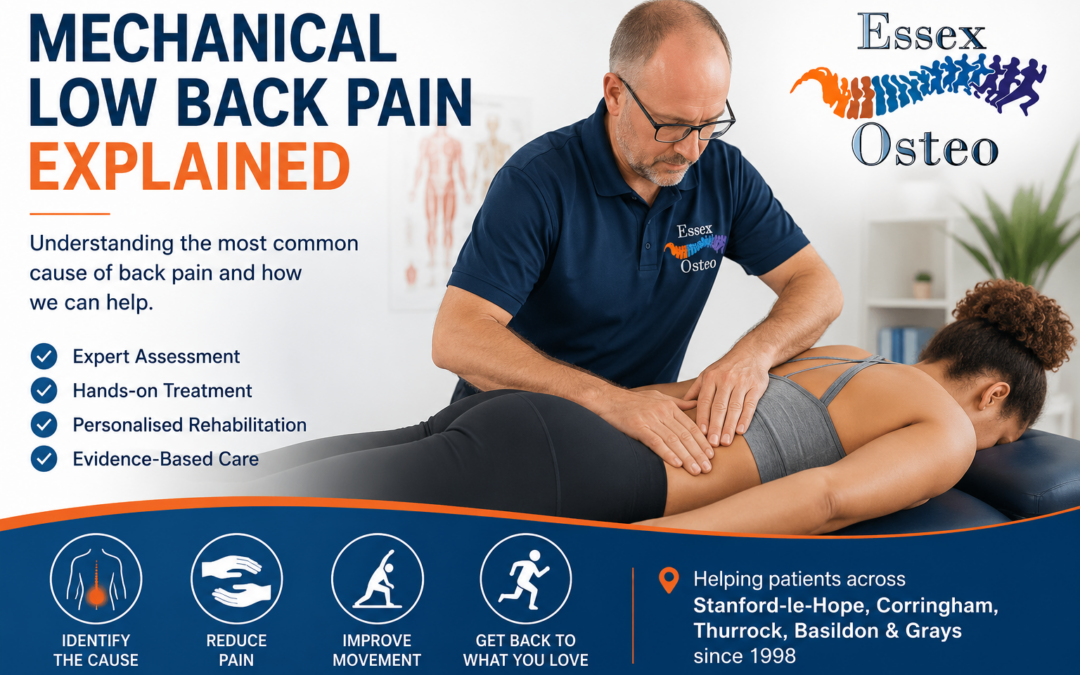
Mechanical Low Back Pain Explained: Causes, Symptoms and Treatment
Mechanical low back pain is the most common type of back pain, accounting for around 90% of cases seen by healthcare professionals. Despite its name, it doesn’t mean there is something “broken” or permanently damaged. Instead, it describes pain that arises from the muscles, joints, ligaments, discs and other structures of the lower back, often influenced by how they move and respond to everyday activities.
At Essex Osteo in Stanford-le-Hope, mechanical low back pain is one of the most common conditions we assess and treat. Understanding what it is—and what it isn’t—can help reduce worry and support a quicker recovery.
What Is Mechanical Low Back Pain?
Mechanical low back pain refers to pain that changes with movement or position. Symptoms often improve with some activities and worsen with others. Unlike pain caused by infection, inflammatory disease or serious spinal conditions, mechanical back pain is usually related to how the tissues of the spine are functioning rather than a serious underlying disease.
In many cases, there is no single injured structure. Pain often develops because several factors are affecting the spine at the same time.
What Causes Mechanical Low Back Pain?
Common contributing factors include:
Muscle Overload
Muscles can become strained after lifting, twisting, gardening, DIY, sport or starting a new exercise programme.
Joint Irritation
The small facet joints of the spine can become stiff or irritated, leading to local pain and reduced movement.
Disc Irritation
The discs between the vertebrae absorb shock and allow movement. They can become sensitive following repeated bending, prolonged sitting or increased loading. However, many disc changes seen on MRI scans are a normal part of ageing and are not always responsible for pain.
Ligament Strain
Ligaments provide stability to the spine. Sudden or repetitive movements can temporarily overload these tissues.
Reduced Physical Conditioning
Weakness, reduced flexibility or long periods of inactivity may increase the demands placed on the lower back during everyday activities.
Lifestyle Factors
Several non-structural factors can also influence mechanical back pain, including:
- Poor sleep
- High stress levels
- Smoking
- Reduced physical activity
- Long periods of sitting
- Increased workload or training
Modern pain science shows that pain is influenced by both physical and lifestyle factors, which is why successful treatment often involves more than hands-on therapy alone.
Common Symptoms
Mechanical low back pain may cause:
- Pain across the lower back
- Stiffness after sitting
- Muscle spasms
- Pain when bending or lifting
- Difficulty standing upright after sitting
- Pain that improves with gentle movement
- Pain after prolonged standing or walking
Some people also experience pain into the buttocks or upper thigh. If symptoms travel below the knee with numbness, tingling or weakness, further assessment is recommended to determine whether a nerve may be involved.
Who Is Most at Risk?
Mechanical low back pain can affect anyone but is more common in:
- Office workers
- Healthcare professionals
- Drivers
- Tradespeople
- Parents lifting young children
- Gardeners
- Golfers
- Runners
- Gym users
- People returning to exercise after a break
Is Mechanical Low Back Pain Serious?
In most cases, no.
Although pain can be severe and worrying, mechanical low back pain is rarely caused by serious disease. Most people recover well with the right advice, staying active and receiving appropriate treatment where needed.
However, symptoms such as bladder or bowel changes, saddle numbness, significant leg weakness, unexplained weight loss, fever or severe pain after major trauma require urgent medical assessment.
How Is Mechanical Low Back Pain Diagnosed?
At Essex Osteo, your consultation begins with a detailed discussion about:
- Your symptoms
- Medical history
- Lifestyle
- Work activities
- Exercise habits
- Previous injuries
This is followed by a physical examination assessing:
- Movement
- Posture
- Joint mobility
- Muscle strength
- Neurological function
- Functional activities
Most people do not need an MRI or X-ray. Imaging is generally only recommended when the findings are likely to change management or if there are concerns about a more serious condition.
How Is Mechanical Low Back Pain Treated?
Treatment should always be tailored to the individual and may include:
Osteopathic Treatment
Hands-on techniques may help improve movement, reduce muscle tension and restore normal joint function where appropriate.
Exercise Rehabilitation
Specific exercises help improve strength, flexibility, confidence and long-term resilience.
Dry Needling
For some patients, dry needling may be used alongside rehabilitation to reduce muscle tension and support movement.
Education
Understanding your condition is one of the most effective treatments. Knowing that movement is safe and beneficial can reduce fear and help you return to normal activities sooner.
Lifestyle Advice
Simple changes to work habits, lifting techniques, sleep, activity levels and stress management can all contribute to recovery.
Can Mechanical Low Back Pain Be Prevented?
Although no one can completely eliminate the risk of back pain, you can reduce your chances of future episodes by:
- Staying physically active
- Performing regular strength exercises
- Taking breaks from prolonged sitting
- Gradually increasing exercise loads
- Improving lifting technique
- Maintaining a healthy body weight
- Prioritising sleep and recovery
Why Choose Essex Osteo?
Since 1998, Essex Osteo has helped people across Stanford-le-Hope, Corringham, Thurrock, Basildon and Grays manage mechanical low back pain with evidence-informed care.
Ben Calvert-Painter is a Registered Osteopath with over 25 years of clinical experience, an NHS MSK First Contact Practitioner, clinical educator and international lecturer. Every treatment plan is based on a thorough assessment, current evidence and your individual goals.
Continue Reading
Mechanical low back pain is just one aspect of understanding spinal health. To learn more about spinal anatomy, other causes of back pain, treatment options, prevention strategies and frequently asked questions, visit our Complete Guide to Low Back Pain. This cornerstone guide brings together everything you need to know about diagnosing, treating and preventing low back pain.
Frequently Asked Questions
What is the difference between mechanical back pain and sciatica?
Mechanical back pain usually affects the lower back and changes with movement. Sciatica occurs when the sciatic nerve becomes irritated, causing pain that often travels below the knee and may be accompanied by numbness or tingling.
Is walking good for mechanical low back pain?
For most people, gentle walking is encouraged and can help reduce stiffness, improve circulation and support recovery. The amount should be based on your symptoms and gradually increased.
Can osteopathy help mechanical low back pain?
Many patients benefit from a combination of osteopathic treatment, education and rehabilitation. Treatment is tailored to the individual’s assessment findings rather than using the same approach for everyone.
How long does mechanical low back pain last?
Many people notice improvement within a few weeks, although recovery varies depending on the cause, activity levels, general health and adherence to rehabilitation advice.
Book an Assessment
If mechanical low back pain is affecting your work, sleep, exercise or daily life, Essex Osteo can provide a comprehensive assessment and personalised treatment plan to help you recover and reduce the risk of future episodes.
https://essex-osteo.uk1.cliniko.com/bookings
Essex Osteo – Helping people move better, feel better and live better since 1998.