
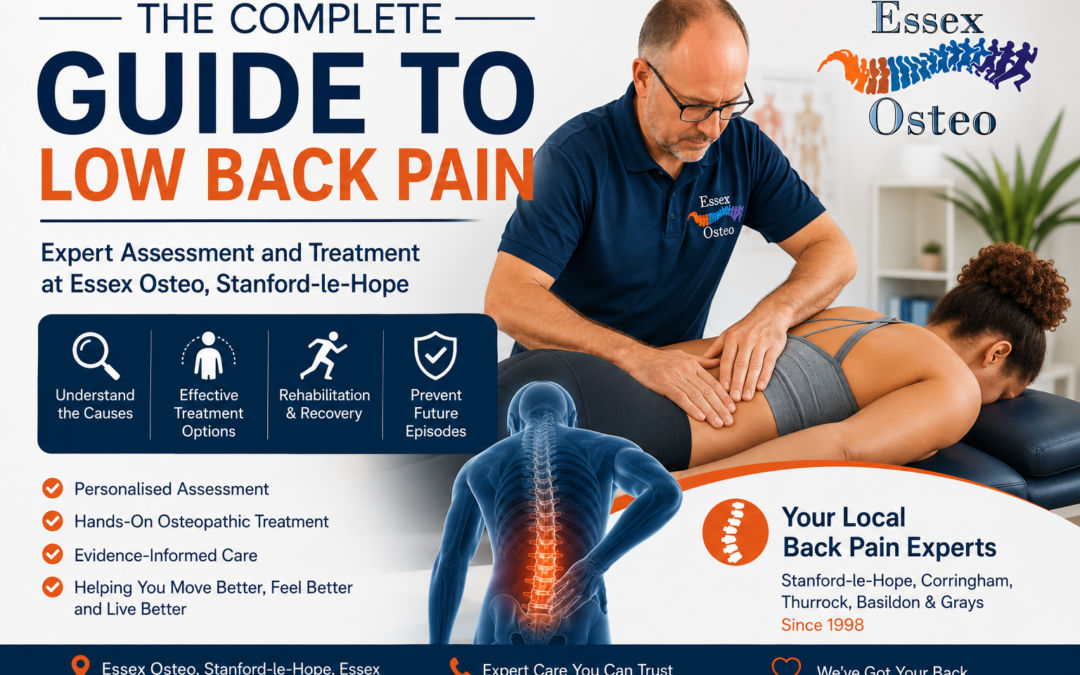
The Complete Guide to Low Back Pain
Expert Assessment and Treatment at Essex Osteo, Stanford-le-Hope
Low back pain is one of the most common musculoskeletal conditions, affecting people of all ages and lifestyles. Whether your pain started after lifting, sitting at a desk, gardening, running or seemingly appeared for no obvious reason, understanding why it has developed is the first step towards recovery.
At Essex Osteo, we have been helping patients with back pain since 1998. Every patient receives a thorough assessment to identify the factors contributing to their pain before developing an individual treatment and rehabilitation plan.
Contents
- What is low back pain?
- Understanding your spine
- Common causes of low back pain
- Signs and symptoms
- When should you worry?
- How low back pain is diagnosed
- Evidence-based treatment options
- How osteopathy can help
- Self-management advice
- Preventing future episodes
- Frequently Asked Questions
- Book an appointment
What is Low Back Pain?
Low back pain refers to discomfort between the bottom of the ribs and the buttocks. It may be short-term (acute), last several weeks (subacute), or continue for more than three months (chronic).
Although back pain can feel alarming, the vast majority of cases are non-specific mechanical low back pain, meaning there is no serious disease or permanent damage. Pain usually results from a combination of muscular, joint, disc and nervous system factors rather than a single injured structure.
Many people recover well with the right advice, movement and evidence-based treatment.
Understanding Your Spine
Your lower back is made up of several structures that work together.
Vertebrae
These bones form the framework of your spine and protect the spinal cord.
Intervertebral Discs
Discs act as shock absorbers, allowing flexibility while distributing forces through the spine.
Facet Joints
Small joints at the back of the spine guide movement and may become stiff or irritated.
Ligaments
Strong connective tissues provide stability during movement.
Muscles
Deep stabilising muscles and larger movement muscles work together to support the spine.
Nerves
Nerves leave the spine to supply sensation and strength to the legs. Irritation of these nerves can produce sciatica.
Sacroiliac Joints
These joints connect the spine to the pelvis and may contribute to pain around the lower back or buttock.
Common Causes of Low Back Pain
Low back pain rarely has a single cause. Common contributing factors include:
- Muscle strains
- Joint stiffness
- Disc irritation
- Facet joint dysfunction
- Sacroiliac joint pain
- Degenerative arthritis
- Poor physical conditioning
- Prolonged sitting
- Heavy lifting
- Sports injuries
- Pregnancy-related changes
- Stress and poor sleep
- Persistent pain involving increased nervous system sensitivity
Signs and Symptoms
Symptoms vary from person to person and may include:
- Dull aching pain
- Sharp pain
- Morning stiffness
- Muscle spasm
- Difficulty bending
- Pain when standing from sitting
- Pain during walking
- Pain into the buttock
- Sciatica
- Pins and needles
- Leg weakness
Red Flag Symptoms
Urgent medical assessment is recommended if you experience:
- Loss of bladder or bowel control
- Numbness around the groin or saddle area
- Progressive leg weakness
- Fever with severe back pain
- Unexplained weight loss
- Pain after significant trauma
- Night pain that does not ease with rest
Fortunately, these causes are uncommon but should never be ignored.
How is Low Back Pain Diagnosed?
Assessment begins with a detailed discussion about your symptoms, lifestyle and medical history.
Your osteopath will then assess:
- Movement
- Posture
- Muscle strength
- Joint mobility
- Neurological function
- Functional activities
Imaging such as MRI or X-rays is only recommended when clinically indicated, as many age-related changes are normal and do not necessarily explain pain.
Evidence-Based Treatment
Treatment depends on your individual assessment and may include:
- Osteopathic manual therapy
- Joint mobilisation
- Manipulation where appropriate
- Soft tissue treatment
- Dry needling
- Rehabilitation exercises
- Activity modification
- Education
- Advice on returning to work and sport
Treatment aims to reduce pain while improving confidence and long-term function.
How Osteopathy Can Help
Osteopathy takes a whole-person approach.
Rather than simply treating the painful area, your osteopath considers movement patterns, lifestyle, work, sport, previous injuries and general health.
Many patients benefit from combining hands-on treatment with progressive rehabilitation and education.
Self-Management
Recovery is often helped by:
- Keeping active
- Walking daily
- Gradually returning to normal activities
- Strengthening exercises
- Good sleep habits
- Managing stress
- Avoiding prolonged bed rest
- Taking regular breaks from sitting
Preventing Future Episodes
Although back pain cannot always be prevented, your risk may be reduced by:
- Regular exercise
- Strength training
- Maintaining a healthy weight
- Good lifting technique
- Improving flexibility
- Staying active
- Early management of minor symptoms
Why Choose Essex Osteo?
Established in 1998, Essex Osteo provides evidence-informed osteopathic care for patients throughout Stanford-le-Hope, Corringham, Thurrock and the surrounding Essex area.
Ben Calvert-Painter is a Registered Osteopath with over 25 years of experience, an NHS MSK First Contact Practitioner, clinical educator and international lecturer. Every treatment plan is tailored to your individual goals, helping you move better, feel better and return to the activities you enjoy.
Frequently Asked Questions
Can osteopathy help back pain?
Many people with mechanical low back pain benefit from osteopathic assessment, hands-on treatment, rehabilitation and self-management advice.
Should I stay in bed?
No. Remaining active within your comfort level usually supports recovery better than prolonged bed rest.
Do I need an MRI?
Most people do not. Imaging is only recommended when clinically necessary.
Can stress make back pain worse?
Yes. Stress, poor sleep and anxiety can influence how the nervous system processes pain.
Can I exercise with back pain?
In most cases, yes. Appropriate exercise is an important part of recovery.
Book Your Assessment
If you’re struggling with low back pain, sciatica or ongoing stiffness, contact Essex Osteo for a comprehensive assessment and personalised treatment plan.
https://essex-osteo.uk1.cliniko.com/bookings
Essex Osteo – Helping people move better since 1998.