
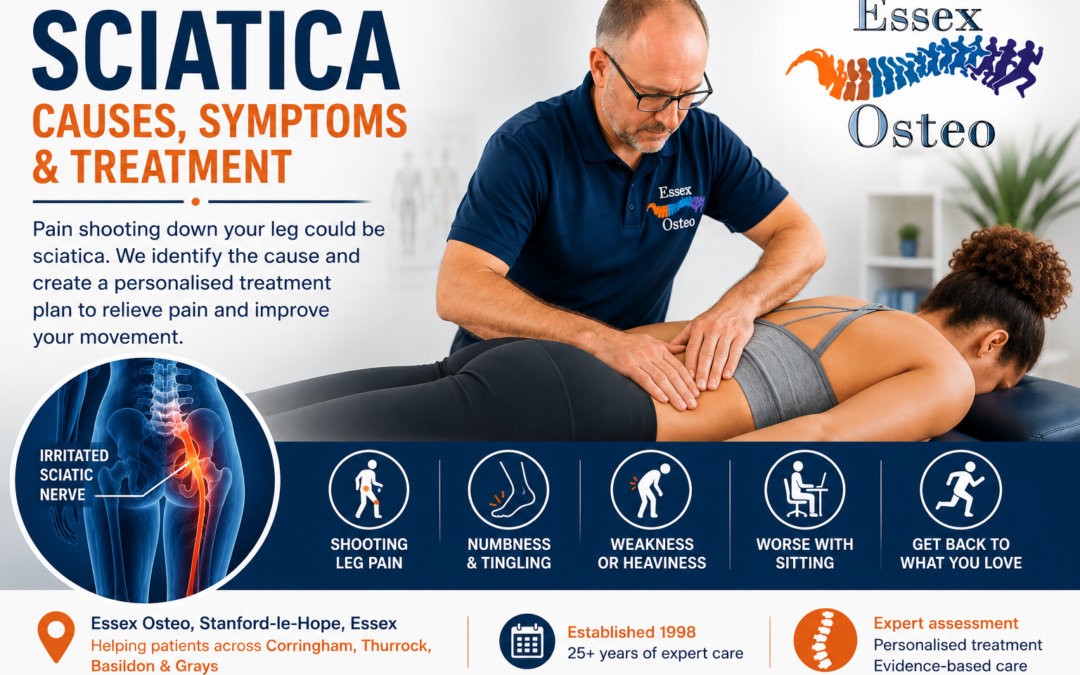
Sciatica: Causes, Symptoms and Treatment
Your Complete Guide to Understanding Sciatica and How Essex Osteo Can Help
Sciatica is one of the most common reasons people seek treatment for leg pain. While many people think sciatica is simply “back pain,” it is actually a condition caused by irritation or compression of the sciatic nerve. The symptoms can range from a mild ache to severe, shooting pain that affects your ability to walk, work or sleep.
At Essex Osteo in Stanford-le-Hope, we regularly assess and treat patients with sciatica, helping them understand the cause of their symptoms and develop an individual treatment plan to reduce pain, improve movement and support recovery.
What is Sciatica?
Sciatica describes pain that travels along the course of the sciatic nerve, the largest nerve in the body. It begins in the lower back, passes through the buttocks and travels down the back of each leg to the feet.
Unlike general low back pain, sciatica involves irritation of a spinal nerve root or the sciatic nerve itself, producing pain that radiates into the leg.
Sciatica is a symptom rather than a diagnosis, meaning several different conditions can cause it.
What Causes Sciatica?
There are several possible causes, including:
Lumbar Disc Herniation (Slipped Disc)
The most common cause of sciatica is irritation of a nerve root by a bulging or herniated intervertebral disc. Although often called a “slipped disc,” discs do not actually slip out of place. Instead, part of the disc bulges or protrudes and may irritate a nearby nerve.
Spinal Stenosis
As we age, the spaces around the nerves may narrow due to age-related changes. This can compress the nerve roots, particularly during walking or standing.
Degenerative Changes
Natural age-related changes to the discs and joints can sometimes contribute to irritation around the nerves.
Spondylolisthesis
One vertebra slips forwards slightly on another, which may narrow the space available for the nerve.
Piriformis Syndrome
Although less common, the piriformis muscle deep in the buttock can irritate the sciatic nerve in some individuals.
Pregnancy
Changes in posture, ligament laxity and increased pressure around the pelvis may occasionally contribute to sciatic symptoms during pregnancy.
What Does Sciatica Feel Like?
Symptoms vary considerably but commonly include:
- Sharp shooting pain down one leg
- Burning pain
- Electric shock sensations
- Pins and needles
- Numbness
- Muscle weakness
- Pain in the buttock
- Pain extending into the calf or foot
Many people also experience low back pain, although leg pain is often the most troublesome symptom.
Symptoms usually affect one leg rather than both.
What Makes Sciatica Worse?
Symptoms may increase with:
- Sitting for prolonged periods
- Driving
- Coughing or sneezing
- Bending forwards
- Heavy lifting
- Twisting
- Standing for long periods
Many patients notice that gentle walking actually eases their symptoms.
How is Sciatica Diagnosed?
At Essex Osteo, assessment begins with a detailed discussion about your symptoms, including:
- Where the pain travels
- When it started
- Activities that aggravate or ease symptoms
- Medical history
- Previous episodes
Your osteopath will assess:
- Spinal movement
- Muscle strength
- Reflexes
- Sensation
- Walking pattern
- Neural tension tests
- Functional movement
This thorough assessment helps determine whether symptoms are consistent with sciatica or another condition.
Do I Need an MRI?
Not usually.
Most patients can be diagnosed accurately through a detailed clinical assessment.
MRI scans are generally recommended if:
- Symptoms are severe.
- Progressive muscle weakness develops.
- Surgery is being considered.
- Symptoms persist despite appropriate treatment.
- Serious pathology is suspected.
Many people have disc bulges visible on MRI without experiencing any symptoms, so scan findings must always be interpreted alongside your clinical examination.
How Can Osteopathy Help Sciatica?
Treatment depends on the cause of your symptoms and may include:
Osteopathic Manual Therapy
Gentle hands-on techniques may improve spinal movement and reduce irritation around affected tissues.
Soft Tissue Treatment
Reducing muscle tension around the lower back, hips and buttocks may improve comfort and movement.
Rehabilitation Exercises
Specific exercises help improve flexibility, strength and nerve mobility while reducing the likelihood of future episodes.
Dry Needling
Where appropriate, dry needling may help reduce muscle tension associated with sciatic pain.
Education
Understanding your condition is one of the most effective treatments. Knowing when to stay active, when to modify activities and how to manage symptoms confidently can improve recovery.
Can Sciatica Get Better Without Surgery?
Yes.
The majority of people improve without surgery.
Most episodes settle with:
- Staying active
- Appropriate exercise
- Pain management
- Manual therapy where appropriate
- Rehabilitation
- Time
Surgery is generally reserved for persistent symptoms, significant weakness or specific medical indications.
When Should You Seek Urgent Medical Attention?
Although uncommon, urgent medical assessment is required if you develop:
- Loss of bladder or bowel control
- Numbness around the saddle or groin area
- Rapidly worsening leg weakness
- Severe pain following major trauma
- Fever, unexplained weight loss or night pain
These symptoms require immediate medical review.
Can Sciatica Be Prevented?
While not all cases can be prevented, you can reduce your risk by:
- Exercising regularly
- Strengthening your core and hips
- Maintaining flexibility
- Avoiding prolonged sitting
- Using good lifting techniques
- Managing body weight
- Staying physically active
Why Choose Essex Osteo?
Since 1998, Essex Osteo has been helping patients across Stanford-le-Hope, Corringham, Thurrock, Basildon and Grays recover from sciatica and other musculoskeletal conditions.
Ben Calvert-Painter is a Registered Osteopath, NHS MSK First Contact Practitioner, clinical educator and international lecturer with over 25 years of clinical experience. Every patient receives an individual assessment and evidence-informed treatment plan tailored to their needs and goals.
Continue Reading
Sciatica is just one cause of leg and back pain. To learn more about spinal anatomy, mechanical back pain, slipped discs, treatment options, rehabilitation and preventing future episodes, read our Complete Guide to Low Back Pain. This cornerstone article explains everything you need to know about understanding and managing low back pain and related conditions.
You may also find these articles helpful:
- Mechanical Low Back Pain Explained
- What Causes Low Back Pain?
- Lumbar Disc Herniation (Slipped Disc) Explained
- When Should You Have an MRI for Back Pain?
- How Osteopathy Helps Low Back Pain
Frequently Asked Questions
Is sciatica the same as back pain?
No. Sciatica refers to irritation of the sciatic nerve, causing pain that radiates into the leg. While many people also have lower back pain, the leg pain is often the defining feature.
How long does sciatica last?
Many people improve within a few weeks, although recovery varies depending on the underlying cause, overall health and treatment.
Is walking good for sciatica?
For most people, gentle walking is encouraged as it can help reduce stiffness, maintain mobility and support recovery. The amount should be guided by your symptoms.
Can osteopathy help sciatica?
Many patients benefit from osteopathic treatment combined with rehabilitation exercises and education. Treatment is always tailored to the individual’s assessment findings.
Book Your Sciatica Assessment
If pain, numbness or tingling is travelling down your leg, don’t ignore it. Early assessment can help identify the cause and guide the most appropriate treatment.
At Essex Osteo, we provide comprehensive assessments and personalised treatment plans to help you recover safely and return to the activities you enjoy.
Essex Osteo – Helping people move better, feel better and live better since 1998.