
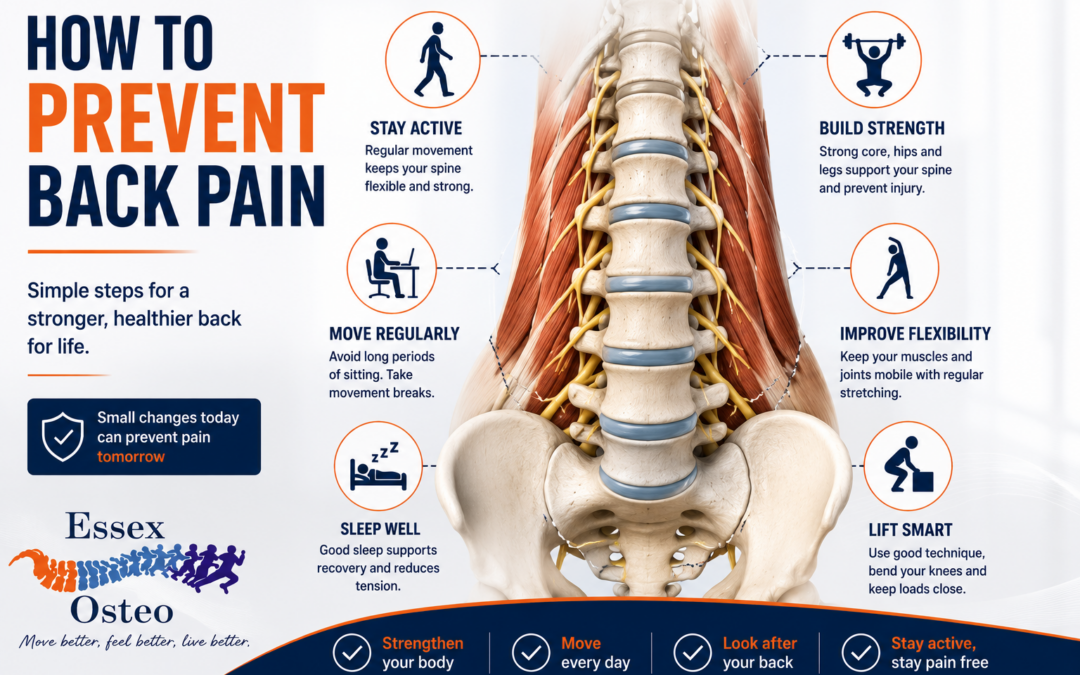
How to Prevent Back Pain
Evidence-Based Tips to Keep Your Back Healthy and Reduce the Risk of Future Pain
Back pain is one of the most common health problems worldwide, affecting people of all ages and lifestyles. While not every episode can be prevented, there are many simple, evidence-based steps you can take to reduce your risk and keep your spine healthy.
At Essex Osteo in Stanford-le-Hope, prevention is just as important as treatment. We don’t just help patients recover from back pain—we help them understand why it happened and how to reduce the likelihood of it returning.
Whether you work at a desk, lift heavy objects, enjoy running, play golf or simply want to stay active as you get older, these practical tips can help protect your back.
Can Back Pain Be Prevented?
The simple answer is not always.
Most back pain develops because of a combination of factors, including lifestyle, physical fitness, work demands, previous injuries and natural age-related changes.
However, research shows that regular physical activity, maintaining strength and staying active are among the most effective ways to reduce your risk of persistent back pain.
The goal isn’t to avoid every movement—it’s to build a back that is strong, flexible and resilient.
1. Stay Active
One of the biggest risk factors for back pain is doing too little.
Your spine is designed to move. Regular movement helps:
- Keep joints mobile
- Strengthen muscles
- Improve circulation
- Maintain flexibility
- Support healthy discs
- Reduce stiffness
Aim for at least 150 minutes of moderate exercise each week, such as brisk walking, cycling or swimming, combined with strength training on two or more days.
2. Build Strength
Strong muscles help support your spine and reduce the load placed on joints and discs.
Focus on strengthening:
- Core muscles
- Gluteal muscles
- Hip muscles
- Legs
- Upper back
Exercises such as bridges, bird dogs, squats, lunges and planks can all play an important role when performed correctly.
3. Avoid Sitting for Too Long
Many people spend hours sitting at work, in the car or at home. Prolonged sitting can lead to stiffness and reduced spinal mobility.
Simple ways to reduce the effects include:
- Standing up every 30–60 minutes
- Walking while taking phone calls
- Using the stairs where possible
- Stretching regularly
- Changing position frequently
There is no “perfect posture”—your best posture is your next posture.
4. Lift Smart, Not Perfect
You don’t need to fear lifting.
Instead:
- Keep the load close to your body
- Use your legs where practical
- Avoid sudden twisting while carrying heavy objects
- Break heavy loads into smaller ones when possible
- Ask for help if needed
Building confidence with lifting is just as important as technique.
5. Maintain a Healthy Weight
Excess body weight can increase the physical demands placed on the spine and may contribute to persistent back pain.
Regular exercise and a balanced diet support both spinal health and overall wellbeing.
6. Keep Moving at Work
Whether you’re an office worker, healthcare professional, driver or tradesperson, movement is essential.
Try to:
- Alternate sitting and standing
- Stretch regularly
- Walk during breaks
- Adjust your workstation
- Avoid remaining in one position for prolonged periods
Small changes throughout the day often make a big difference.
7. Improve Flexibility
Maintaining flexibility around your hips, legs and spine can improve movement and reduce stiffness.
Useful stretches include:
- Hip flexor stretches
- Hamstring stretches
- Gluteal stretches
- Cat-camel mobility exercises
- Thoracic rotation exercises
Stretch gently and regularly rather than forcing movement.
8. Prioritise Sleep
Poor sleep is linked with an increased risk of persistent pain.
To improve sleep:
- Keep regular sleep times
- Reduce screen use before bed
- Stay physically active
- Choose a supportive mattress that feels comfortable for you
- Sleep in a position that allows you to relax
There is no single “best” sleeping position—comfort is the priority.
9. Manage Stress
Stress affects more than your mind—it also influences how your nervous system processes pain.
Simple strategies include:
- Walking outdoors
- Deep breathing
- Mindfulness
- Regular exercise
- Spending time with family and friends
- Enjoying hobbies
Looking after your mental wellbeing is an important part of looking after your back.
10. Don’t Ignore Early Warning Signs
Small aches and stiffness are often easier to manage than long-standing pain.
Seek professional advice if:
- Pain lasts more than two weeks
- Symptoms keep returning
- Pain affects sleep or work
- You’re unsure what caused it
Early assessment can often prevent a minor problem becoming a persistent one.
Common Myths About Back Pain
“I should stay in bed.”
In most cases, staying active is more helpful than prolonged bed rest.
“My spine is fragile.”
Your spine is incredibly strong and designed to cope with movement and everyday activities.
“Lifting damages your back.”
Lifting itself is not harmful. Gradually building strength and confidence is one of the best ways to protect your back.
“Pain means I’m causing damage.”
Pain and tissue damage are not always the same. Many people experience pain without serious injury, and understanding this can help reduce fear and support recovery.
How Osteopathy Can Help Prevent Back Pain
Prevention is about more than treating symptoms.
At Essex Osteo, we assess:
- Your movement
- Muscle strength
- Flexibility
- Work demands
- Lifestyle
- Previous injuries
- Exercise habits
Your personalised plan may include:
- Osteopathic treatment
- Joint mobilisation
- Soft tissue therapy
- Dry needling (where appropriate)
- Tailored rehabilitation exercises
- Advice on work, sport and daily activities
Our goal is to help you build a stronger, more resilient back.
Why Choose Essex Osteo?
Since 1998, Essex Osteo has been helping patients across Stanford-le-Hope, Corringham, Thurrock, Basildon and Grays recover from and prevent back pain.
Ben Calvert-Painter is a Registered Osteopath, NHS MSK First Contact Practitioner, clinical educator and international lecturer with over 25 years of clinical experience.
Every patient receives a comprehensive assessment, evidence-informed treatment and a personalised plan to help reduce pain, improve movement and prevent future problems.
Continue Reading
Prevention is one part of maintaining a healthy spine.
To learn more about spinal anatomy, common causes of back pain, sciatica, slipped discs, rehabilitation and treatment options, visit our Complete Guide to Low Back Pain.
You may also find these articles helpful:
- What Causes Low Back Pain?
- Mechanical Low Back Pain Explained
- Best Exercises for Low Back Pain
- How Osteopathy Helps Low Back Pain
- Sciatica: Causes, Symptoms and Treatment
- Facet Joint Pain
- Slipped Disc or Herniated Disc – What Does It Mean?
Frequently Asked Questions
What is the best way to prevent back pain?
The most effective approach combines regular exercise, strength training, staying active, managing your workload and seeking early advice if symptoms develop.
Is walking good for preventing back pain?
Yes. Walking is a simple, low-impact activity that helps maintain mobility, improve circulation and support spinal health.
Does good posture prevent back pain?
There is no single perfect posture. Regular movement and avoiding prolonged static positions are generally more important than trying to sit or stand perfectly.
Can osteopathy help prevent recurring back pain?
Yes. Osteopathy can help identify contributing factors, improve movement, provide tailored rehabilitation and educate you on strategies to reduce the likelihood of future episodes.
Book an Assessment
If you’re experiencing recurring back pain or want to reduce your risk of future problems, Essex Osteo can help.
We provide expert osteopathic care, personalised rehabilitation and practical advice to help you stay active, move confidently and keep doing the things you enjoy.
Essex Osteo – Helping people move better, feel better and live better since 1998.
References
- National Institute for Health and Care Excellence (NICE). Low back pain and sciatica in over 16s: assessment and management (NG59).
- World Health Organization. Low Back Pain Fact Sheet.
- Foster NE, et al. Prevention and treatment of low back pain: evidence, challenges and promising directions. The Lancet. 2018.
- Hartvigsen J, et al. What low back pain is and why we need to pay attention. The Lancet. 2018.