
Lumbar Spinal Stenosis: Symptoms, Causes and Treatment
Understanding Spinal Canal Narrowing and How Osteopathy Can Help
If you’ve been diagnosed with lumbar spinal stenosis, or your MRI mentions “spinal canal narrowing,” it’s natural to wonder what it means and whether surgery is inevitable.
The good news is that many people with lumbar spinal stenosis manage their symptoms successfully with conservative treatment, exercise and lifestyle modifications. In fact, spinal narrowing is common as we age, and not everyone with stenosis experiences pain.
At Essex Osteo in Stanford-le-Hope, we regularly assess and treat people with lumbar spinal stenosis. Our aim is to help reduce pain, improve walking tolerance and keep you active using evidence-informed care.
What Is Lumbar Spinal Stenosis?
The spinal canal is the hollow passage running through the centre of your spine that protects the spinal cord and nerves.
Lumbar spinal stenosis occurs when this canal becomes narrower, reducing the available space for the nerves travelling to your legs.
The narrowing usually develops gradually over many years due to normal age-related changes rather than a single injury.
What Causes Lumbar Spinal Stenosis?
Several age-related changes can contribute to spinal stenosis, including:
- Degenerative disc disease
- Thickening of spinal ligaments (ligamentum flavum)
- Facet joint arthritis
- Bone spur (osteophyte) formation
- Mild vertebral slippage (degenerative spondylolisthesis)
These changes often occur together and may gradually reduce the space available for the nerves.
Who Gets Lumbar Spinal Stenosis?
Lumbar spinal stenosis most commonly affects adults over the age of 60, although symptoms can develop earlier.
Risk factors include:
- Increasing age
- Previous back injuries
- Osteoarthritis
- Family history
- Previous spinal surgery
- Degenerative spinal changes
Common Symptoms
Symptoms vary considerably between individuals.
Many people experience:
- Lower back pain
- Pain into one or both legs
- Numbness or tingling
- Leg weakness
- Heaviness in the legs
- Reduced walking distance
- Difficulty standing for prolonged periods
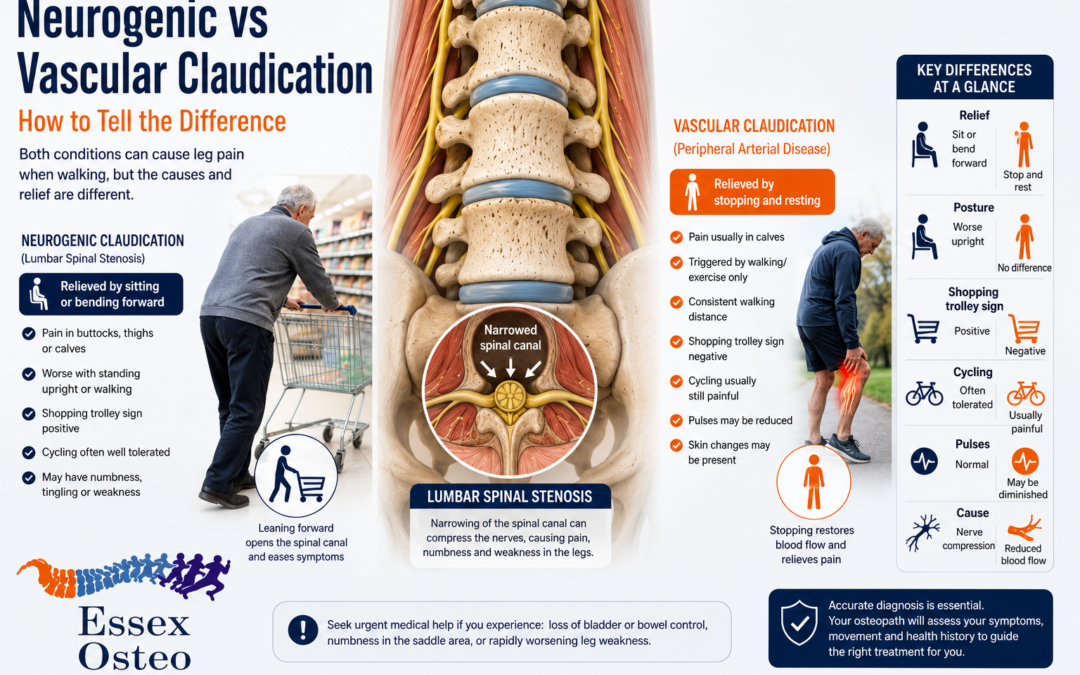
One of the most characteristic features is neurogenic claudication.
What Is Neurogenic Claudication?
Neurogenic claudication is the hallmark symptom of lumbar spinal stenosis.
People often notice:
- Leg pain while walking
- Symptoms worsening when standing upright
- Relief when sitting down
- Relief when leaning forwards
Many patients tell us:
“I can walk much further if I’m pushing a shopping trolley.”
This is because leaning forwards temporarily creates more space around the spinal nerves.
Why Does Leaning Forward Help?
Extending (arching) the lower back slightly narrows the spinal canal.
Flexing (bending forwards) gently opens the canal and reduces pressure on the nerves.
This explains why many people:
- Prefer cycling to walking
- Lean on shopping trolleys
- Find uphill walking easier than downhill
How Is Lumbar Spinal Stenosis Diagnosed?
Diagnosis begins with a detailed clinical assessment.
Your osteopath will evaluate:
- Walking pattern
- Lumbar movement
- Hip mobility
- Strength
- Reflexes
- Sensation
- Balance
MRI is the most common investigation when symptoms persist or surgery is being considered.
However, MRI findings should always be interpreted alongside your symptoms, as many people have narrowing without pain.
Can Lumbar Spinal Stenosis Be Treated Without Surgery?
Yes.
Most people improve with conservative management.
Treatment aims to:
- Reduce symptoms
- Improve walking tolerance
- Increase mobility
- Maintain independence
- Improve strength
How Osteopathy Can Help
At Essex Osteo, treatment may include:
Hands-on osteopathic treatment
Improving movement of the lumbar spine, pelvis and hips.
Soft tissue therapy
Reducing muscle tension and improving flexibility.
Individual rehabilitation
Exercises focusing on:
- Core strength
- Hip strength
- Balance
- Walking endurance
- Functional mobility
Advice and education
Helping you understand your condition and manage flare-ups confidently.
Dry Needling
Where appropriate, dry needling may help reduce muscular pain and improve movement.
Exercises That May Help
Exercise is one of the most effective treatments.
Commonly recommended activities include:
- Walking within tolerance
- Stationary cycling
- Swimming
- Gentle flexion exercises
- Core strengthening
- Hip strengthening
A personalised programme is always preferable to a generic exercise sheet.
When Might Surgery Be Needed?
Most people never require surgery.
However, surgery may be considered if:
- Conservative treatment fails
- Walking becomes severely restricted
- Progressive neurological weakness develops
- Bladder or bowel symptoms occur (this requires urgent medical assessment)
When Should You Seek Urgent Medical Advice?
Seek immediate medical attention if you develop:
- Loss of bladder or bowel control
- Numbness around the saddle area
- Rapidly worsening leg weakness
- Difficulty controlling your legs
These symptoms may indicate cauda equina syndrome, which is a medical emergency.
Living Well with Lumbar Spinal Stenosis
Many people continue to enjoy active lives despite spinal stenosis.
The key principles are:
- Keep moving
- Stay strong
- Avoid prolonged inactivity
- Build walking gradually
- Maintain flexibility
- Seek advice early if symptoms worsen
Why Choose Essex Osteo?
Since 1998, Essex Osteo has been helping patients across Stanford-le-Hope, Corringham, Thurrock, Basildon and Grays manage spinal pain and maintain active, independent lives.
Ben Calvert-Painter is a Registered Osteopath, NHS MSK First Contact Practitioner, clinical educator and international lecturer with over 25 years of experience assessing and treating spinal conditions.
Our evidence-based approach combines osteopathic treatment, rehabilitation and patient education to help you move more comfortably and confidently.
Frequently Asked Questions
Is lumbar spinal stenosis permanent?
The structural changes are generally age-related and cannot be reversed, but symptoms often improve significantly with conservative treatment, exercise and lifestyle adjustments.
Is walking good for lumbar spinal stenosis?
Yes, but it should be done within your comfort level. Many people benefit from shorter, more frequent walks or walking with brief rest periods.
Can osteopathy help lumbar spinal stenosis?
Many patients benefit from osteopathic treatment combined with tailored rehabilitation, helping improve mobility, reduce pain and increase walking tolerance.
Does everyone with spinal stenosis need surgery?
No. Most people are successfully managed without surgery. Surgery is usually reserved for severe or progressive symptoms that do not respond to conservative care.
Can lumbar spinal stenosis get worse over time?
It can progress gradually, but many people remain stable for years. Staying active, maintaining strength and seeking appropriate treatment can help manage symptoms and preserve function.
References
- National Institute for Health and Care Excellence (NICE). Low Back Pain and Sciatica in Over 16s: Assessment and Management (NG59).
- North American Spine Society. Clinical Guidelines for the Diagnosis and Treatment of Degenerative Lumbar Spinal Stenosis.
- Hartvigsen J, et al. What low back pain is and why we need to pay attention. The Lancet. 2018.
- World Health Organization. Low Back Pain Fact Sheet.