
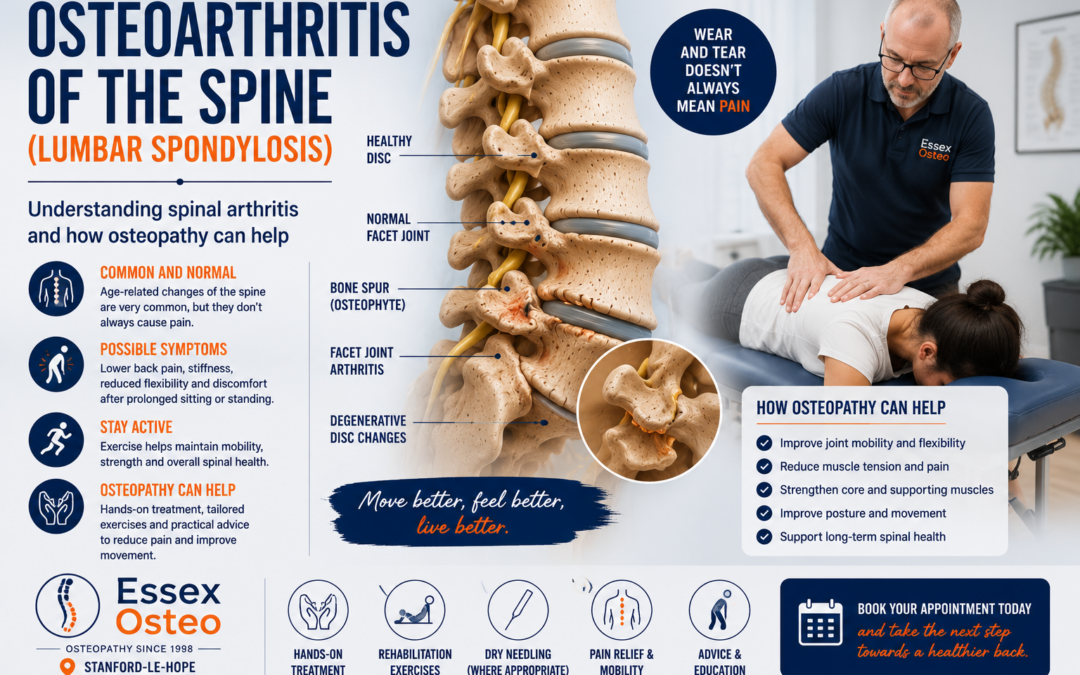
Osteoarthritis of the Spine (Lumbar Spondylosis): Causes, Symptoms and Treatment
Understanding Spinal Arthritis and How Osteopathy Can Help
If you’ve been told your X-ray or MRI shows osteoarthritis of the spine or lumbar spondylosis, you may be worried that your back is “wearing out.” Fortunately, these findings are very common, especially as we get older, and they don’t always explain your pain.
Many people with spinal osteoarthritis have little or no discomfort, while others experience stiffness, aching or reduced mobility. The important thing is to treat the person, not just the scan.
At Essex Osteo in Stanford-le-Hope, we assess and treat people with spinal osteoarthritis using an evidence-based approach that combines hands-on treatment, exercise and education to help you move with confidence.
What Is Osteoarthritis of the Spine?
Osteoarthritis (OA) is the gradual wear and repair process that affects joints over time. In the spine, it most commonly affects the facet joints, the small joints at the back of each vertebra that guide movement.
As cartilage becomes thinner, the body responds by laying down extra bone (osteophytes or bone spurs) and the joints may become stiffer. These changes are a normal part of ageing for many people.
What Is Lumbar Spondylosis?
Lumbar spondylosis is a broad term used to describe age-related changes in the lower back, including:
- Facet joint osteoarthritis
- Degenerative disc disease
- Bone spur (osteophyte) formation
- Thickening of spinal ligaments
These changes often occur together and do not always cause symptoms.
What Causes Spinal Osteoarthritis?
Several factors can contribute, including:
- Increasing age
- Previous back injuries
- Repetitive physical loading
- Genetics
- Excess body weight
- Reduced muscle strength
- Sedentary lifestyle
Age is the biggest risk factor, but staying active can help reduce symptoms and maintain function.
Common Symptoms
Symptoms vary from person to person but may include:
- Persistent lower back pain
- Morning stiffness
- Pain after prolonged sitting or standing
- Reduced flexibility
- Difficulty bending or twisting
- Muscle tightness
- Pain that improves with gentle movement
If arthritis contributes to narrowing of the spinal canal, symptoms of lumbar spinal stenosis may also develop.
How Is It Diagnosed?
Diagnosis begins with a detailed history and physical examination.
Your osteopath will assess:
- Spinal movement
- Hip mobility
- Muscle strength
- Flexibility
- Balance
- Neurological function
X-rays may show joint narrowing and bone spurs, while MRI provides more detail about discs, nerves and surrounding tissues.
However, imaging findings should always be interpreted alongside your symptoms, as many people without back pain have age-related changes on scans.
Does Osteoarthritis Always Cause Pain?
No.
Research has shown that many adults have spinal osteoarthritis visible on imaging but experience no pain at all.
Pain is influenced by many factors, including muscle strength, activity levels, sleep, stress and general health—not just structural changes seen on a scan.
How Osteopathy Can Help
Treatment focuses on improving movement, reducing pain and helping you remain active.
At Essex Osteo, your care may include:
Hands-on osteopathic treatment
Gentle techniques to improve joint movement and reduce stiffness.
Soft tissue therapy
To relieve muscle tension and improve flexibility.
Individual rehabilitation
Exercises to improve:
- Core strength
- Hip mobility
- Balance
- Flexibility
- Functional movement
Dry Needling
Where appropriate, dry needling may help reduce muscular pain and improve movement.
Lifestyle Advice
Advice on activity, posture, pacing and self-management to help reduce flare-ups.
Should You Keep Exercising?
Yes.
Exercise is one of the most effective treatments for spinal osteoarthritis.
Helpful activities include:
- Walking
- Swimming
- Cycling
- Pilates
- Yoga
- Strength training
Remaining active helps maintain joint health, muscle strength and confidence in movement.
Can Spinal Osteoarthritis Be Prevented?
Although ageing cannot be prevented, you can reduce the impact by:
- Staying physically active
- Maintaining a healthy weight
- Strengthening your core muscles
- Improving flexibility
- Avoiding smoking
- Managing long periods of sitting
When Should You Seek Medical Advice?
Arrange an assessment if your back pain:
- Persists for several weeks
- Is affecting your daily activities
- Is associated with leg pain or numbness
- Is becoming progressively worse
Seek urgent medical attention if you develop:
- Loss of bladder or bowel control
- Saddle numbness
- Severe or progressive leg weakness
These symptoms may indicate cauda equina syndrome, which requires immediate assessment.
Living Well with Spinal Osteoarthritis
Most people with lumbar osteoarthritis continue to enjoy active, independent lives.
The key is to:
- Keep moving
- Build strength
- Manage flare-ups early
- Stay positive
- Seek professional advice when needed
With the right treatment and exercise programme, many people notice significant improvements in pain, mobility and quality of life.
Why Choose Essex Osteo?
Since 1998, Essex Osteo has been helping patients across Stanford-le-Hope, Corringham, Thurrock, Basildon and Grays manage back pain using evidence-based osteopathic care.
Ben Calvert-Painter is a Registered Osteopath, NHS MSK First Contact Practitioner, clinical educator and international lecturer with over 25 years of experience diagnosing and treating spinal conditions.
Our goal is to help you understand your condition, reduce pain and return to the activities that matter most.
Frequently Asked Questions
Is spinal osteoarthritis the same as lumbar spondylosis?
Lumbar spondylosis is a broad term describing age-related changes in the spine, including osteoarthritis of the facet joints, disc degeneration and bone spur formation.
Can osteoarthritis of the spine be cured?
The structural changes cannot be reversed, but symptoms can often be managed very effectively with exercise, education and appropriate treatment.
Can osteopathy help spinal osteoarthritis?
Many patients benefit from osteopathic treatment combined with rehabilitation, helping reduce stiffness, improve mobility and support long-term self-management.
Should I stop exercising if I have spinal arthritis?
No. Regular, appropriate exercise is one of the best ways to manage spinal osteoarthritis and maintain mobility.
Does everyone with spinal arthritis need surgery?
No. Most people improve with conservative treatment, and surgery is only considered in specific situations, such as significant nerve compression or severe functional limitation.
References
- National Institute for Health and Care Excellence (NICE). Low Back Pain and Sciatica in Over 16s: Assessment and Management (NG59).
- World Health Organization. Chronic Musculoskeletal Conditions.
- Hartvigsen J, et al. What low back pain is and why we need to pay attention. The Lancet. 2018.
- Brinjikji W, et al. Systematic Literature Review of Imaging Features of Spinal Degeneration in Asymptomatic Populations. American Journal of Neuroradiology. 2015.