
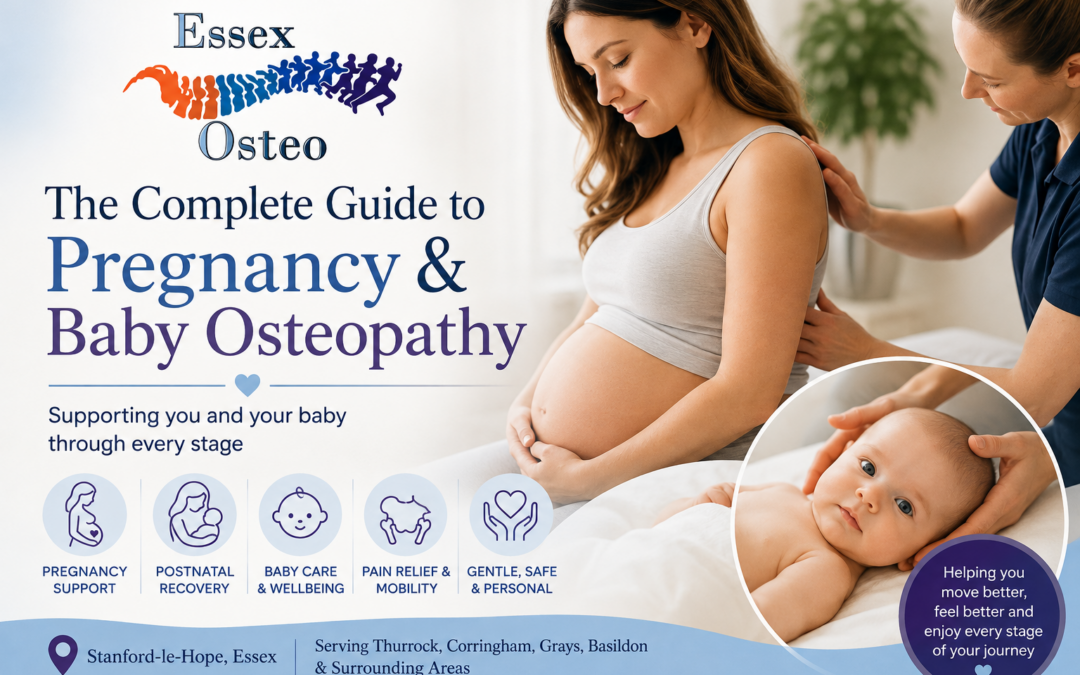
The Complete Guide to Pregnancy & Baby Osteopathy in Stanford-le-Hope, Essex
Everything You Need to Know About Osteopathic Care During Pregnancy, After Birth and for Your Baby
Pregnancy is an exciting journey, but it also places significant demands on your body. As your baby grows, your muscles, joints and posture continually adapt, often leading to aches, pains and discomfort. Following birth, your body begins another period of recovery while adjusting to caring for a newborn.
At the same time, many parents wonder whether osteopathy may be suitable for their baby. Questions about unsettled behaviour, feeding difficulties, head preference, torticollis or general comfort are common, and many parents seek safe, gentle treatment from a qualified healthcare professional.
At Essex Osteo, based in Stanford-le-Hope, Essex, we provide experienced osteopathic care for expectant mothers, postnatal women, babies and infants. Since 1998, we have helped families across Stanford-le-Hope, Corringham, Grays, Basildon, Thurrock and the surrounding areas improve comfort, mobility and wellbeing through evidence-informed, patient-centred care.
Whether you’re experiencing pregnancy-related pain or simply want to understand how osteopathy may support you and your baby, this guide explains everything you need to know.
What Is Osteopathy?
Osteopathy is a regulated healthcare profession that focuses on the diagnosis, treatment and management of musculoskeletal conditions. Osteopaths assess how the body’s muscles, joints, ligaments and connective tissues work together and use hands-on techniques alongside advice and rehabilitation to support movement and function.
In the UK, osteopaths are regulated by the General Osteopathic Council (GOsC), ensuring they meet strict professional and educational standards.
Treatment is always tailored to the individual and may include:
- Gentle joint mobilisation
- Soft tissue massage
- Stretching techniques
- Exercise advice
- Postural guidance
- Rehabilitation
- Self-management strategies
For pregnant women and babies, treatment is modified to ensure it is appropriate for their stage of pregnancy, age and individual needs.
Can You Have Osteopathy During Pregnancy?
Yes. Osteopathy is commonly used throughout pregnancy, although every patient is individually assessed before treatment begins.
Pregnancy creates natural changes throughout the body, including:
- Hormonal changes affecting ligament flexibility
- Changes in posture
- Altered walking patterns
- Increased spinal loading
- Pelvic adaptation
- Changes in breathing mechanics
- Increased abdominal pressure
These normal changes can sometimes contribute to discomfort and reduced mobility.
Many women seek osteopathic care to help improve movement, reduce musculoskeletal pain and remain as comfortable and active as possible throughout pregnancy.
Common Pregnancy Conditions We See
Pregnancy Back Pain
Lower back pain affects many women during pregnancy.
Contributing factors include:
- Changes in posture
- Increased lumbar loading
- Muscle fatigue
- Reduced core stability
- Hormonal ligament laxity
Osteopathic treatment aims to improve movement, reduce muscle tension and support comfortable daily activity.
Pelvic Girdle Pain (PGP)
Previously known as Symphysis Pubis Dysfunction (SPD), pelvic girdle pain may cause discomfort around the front or back of the pelvis.
Symptoms may include:
- Pain turning in bed
- Difficulty walking
- Pain climbing stairs
- Clicking around the pelvis
- Pain standing on one leg
Treatment focuses on improving movement, reducing muscular tension and providing advice to help manage symptoms during everyday activities.
Sciatica During Pregnancy
Pressure around the lower back or pelvis may contribute to symptoms such as:
- Pain travelling down the leg
- Tingling
- Numbness
- Burning discomfort
Assessment helps determine whether symptoms are likely to arise from the lumbar spine, pelvis or surrounding soft tissues before appropriate treatment and advice are provided.
Rib Pain
As the baby grows, the rib cage expands to accommodate changes in posture and breathing.
This may lead to:
- Pain beneath the ribs
- Mid-back discomfort
- Difficulty taking deep breaths
- Pain when sitting
Gentle treatment may help improve mobility around the thoracic spine and rib cage.
Neck Pain and Headaches
Changes in posture, altered sleeping positions and muscle tension frequently contribute to neck pain and tension-type headaches during pregnancy.
Preparing for Labour
Many expectant mothers choose osteopathic treatment during the final weeks of pregnancy to remain as comfortable and mobile as possible.
Treatment may include:
- Improving pelvic mobility
- Reducing muscular tension
- Optimising posture
- Advice regarding movement
- Breathing strategies
- Positioning advice
Osteopathy does not induce labour, but it may help improve comfort and movement as your body prepares for birth.
Osteopathy After Birth
Following delivery, your body begins another significant period of recovery.
Common postnatal complaints include:
- Back pain
- Neck pain
- Pelvic discomfort
- Shoulder pain from feeding
- Wrist pain
- Hip pain
- Muscle tightness
- Reduced mobility
Whether you have had a vaginal birth or Caesarean section, treatment is adapted to your recovery stage.
Advice may include:
- Safe lifting
- Feeding posture
- Carrying techniques
- Core rehabilitation
- Return to exercise
Can Babies Have Osteopathy?
Many parents ask whether babies can receive osteopathic treatment.
Babies are assessed using very gentle, age-appropriate techniques. Treatment does not resemble adult manipulation and is adapted entirely to the infant’s size, age and development.
The first appointment includes:
- A detailed birth history
- Pregnancy history
- Medical history
- Feeding assessment
- Movement assessment
- Gentle physical examination
Parents remain with their baby throughout the appointment.
Why Might Parents Bring Their Baby?
Parents commonly seek assessment if their baby has:
- A preference for looking to one side
- Difficulty turning their head
- Tension following birth
- Flat spots on the head (plagiocephaly)
- Torticollis
- Feeding difficulties
- General stiffness
- Reduced comfort during handling
Some babies are seen following:
- Forceps delivery
- Ventouse delivery
- Caesarean birth
- Long labour
- Rapid labour
Osteopathic assessment aims to identify areas of reduced movement or muscular tension while working alongside other healthcare professionals where appropriate.
What Happens During a Baby Osteopathy Appointment?
Appointments are relaxed and baby-led.
Time is allowed for:
- Feeding
- Changing
- Settling
- Comfort breaks
Assessment usually includes observation of:
- Head movement
- Neck movement
- Overall posture
- Muscle tone
- Developmental movement
- Comfort during handling
Treatment uses gentle hands-on techniques appropriate for infants.
Is Baby Osteopathy Safe?
Safety always comes first.
A registered osteopath will take a detailed history and determine whether osteopathic treatment is appropriate. If symptoms require medical assessment or another healthcare professional, appropriate referral or advice will be given.
Osteopathy complements, rather than replaces, medical care.
Why Choose Essex Osteo?
Choosing a healthcare professional during pregnancy or for your baby is an important decision.
At Essex Osteo we offer:
- Registered Osteopath with over 25 years of clinical experience
- Established clinic since 1998
- Evidence-informed treatment
- Individual assessment for every patient
- Gentle, patient-centred care
- Convenient Stanford-le-Hope location
- Easy access from Corringham, Grays, Basildon and across Thurrock
- Clear explanations and personalised advice
- Rehabilitation and self-management guidance where appropriate
Our goal is to help you feel informed, supported and confident throughout your care.
Frequently Asked Questions
Is osteopathy safe during pregnancy?
For most women, osteopathy can be provided safely throughout pregnancy following an individual assessment. Treatment is adapted to your stage of pregnancy and medical history.
Can osteopathy help pregnancy back pain?
Osteopathy may help improve movement, reduce muscular tension and support the management of pregnancy-related musculoskeletal pain. Results vary between individuals.
Can babies receive osteopathy?
Yes. Babies are treated using very gentle, age-appropriate techniques following a full assessment.
Do I need a GP referral?
No. Most patients can book directly without a referral.
How many treatments will I need?
This varies depending on your symptoms, goals and how your body responds to treatment. Your osteopath will discuss an individual treatment plan after assessment.
When should I bring my baby?
If you have concerns about your baby’s comfort, movement, feeding or head preference, an assessment can help determine whether osteopathic treatment is appropriate or whether referral to another healthcare professional is recommended.
Serving Families Across South Essex
Essex Osteo welcomes patients from:
- Stanford-le-Hope
- Corringham
- Grays
- Basildon
- Tilbury
- South Ockendon
- Thurrock
- Canvey Island
- Benfleet
- Brentwood
- Essex
Book an Appointment at Essex Osteo
Whether you’re preparing for the arrival of your baby, recovering after birth or seeking advice about your baby’s comfort and movement, Essex Osteo is here to help.
With over 25 years of clinical experience, we provide professional, compassionate osteopathic care tailored to you and your family.
If you’re looking for a pregnancy osteopath in Stanford-le-Hope, a baby osteopath near Thurrock, or experienced osteopathic care in Essex, we’d be delighted to welcome you to our clinic.
Related Articles
Explore our in-depth guides:
- Is Osteopathy Safe During Pregnancy?
- Back Pain During Pregnancy: Causes and Treatment
- Pelvic Girdle Pain (PGP/SPD) During Pregnancy
- Sciatica During Pregnancy Explained
- Preparing Your Body for Labour
- Postnatal Osteopathy: Recovery After Birth
- When Should I Take My Baby to an Osteopath?
- Baby Torticollis Explained
- Can Osteopathy Help Colic?
- Baby Reflux Explained
- Understanding Plagiocephaly (Flat Head Syndrome)
- Breastfeeding Difficulties and Body Tension
- Sleep Problems in Babies
- Forceps, Ventouse and Caesarean Birth: What Parents Should Know