
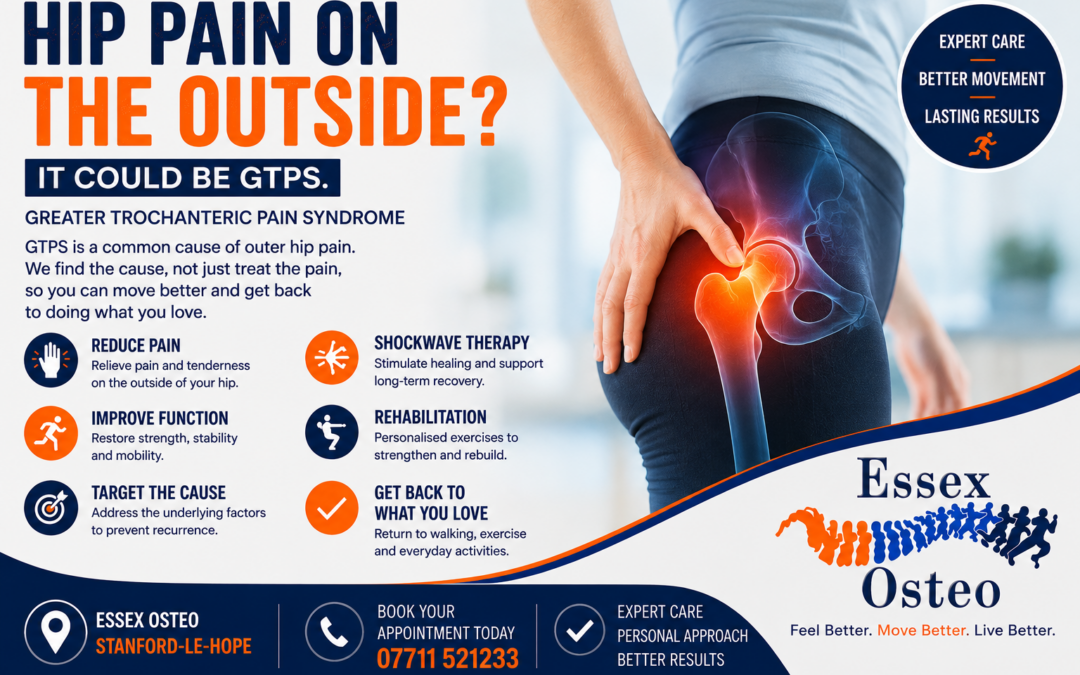
Greater Trochanteric Pain Syndrome (GTPS): Causes, Symptoms and How Osteopathy Can Help
Pain on the outside of your hip making it difficult to sleep, walk or climb stairs? You may be suffering from Greater Trochanteric Pain Syndrome (GTPS). At Essex Osteo in Stanford-le-Hope, we provide evidence-based assessment and treatment to help relieve hip pain, restore movement and get you back to the activities you enjoy.
What is Greater Trochanteric Pain Syndrome (GTPS)?
Greater Trochanteric Pain Syndrome (GTPS) is one of the most common causes of pain on the outside of the hip. It is an umbrella term that describes pain arising from the tendons of the gluteal muscles (gluteus medius and minimus), the bursa over the greater trochanter, or both.
The condition was previously referred to as trochanteric bursitis, but research now shows that in many cases the primary problem is degeneration or overload of the gluteal tendons rather than inflammation of the bursa.
GTPS affects people of all activity levels but is particularly common in women aged 40–70 years.
Common Symptoms of GTPS
Symptoms often include:
- Pain on the outside of the hip
- Pain when lying on the affected side
- Tenderness over the bony prominence of the hip
- Pain when climbing stairs or hills
- Pain after walking for prolonged periods
- Difficulty standing on one leg
- Pain getting out of a chair
- Discomfort when crossing your legs
- Weakness around the hip
Pain may gradually worsen over weeks or months if left untreated.
What Causes GTPS?
GTPS usually develops because the tendons around the hip become overloaded.
Common contributing factors include:
- Weak hip muscles
- Sudden increase in walking or running
- Poor running technique
- Reduced pelvic stability
- Hip arthritis
- Lower back problems
- Leg length differences
- Obesity
- Previous hip injury
- Repetitive climbing of stairs
- Standing on one leg for long periods
Often several factors contribute to the condition.
Who is Most at Risk?
GTPS is more common in:
- Women over 40
- Runners
- Walkers
- Tennis players
- People with lower back pain
- Individuals with knee arthritis
- Those returning to exercise
- Occupations involving prolonged standing
How is GTPS Diagnosed?
Diagnosis is usually made following a detailed clinical assessment.
At Essex Osteo we assess:
- Medical history
- Walking pattern
- Hip movement
- Muscle strength
- Pelvic control
- Lumbar spine function
- Single-leg balance
- Functional activities
Special clinical tests help identify whether the gluteal tendons are the source of your symptoms.
Ultrasound or MRI scans are only required if the diagnosis is uncertain or symptoms fail to improve.
How Can Osteopathy Help GTPS?
Treatment aims to reduce pain, improve hip function and address the underlying causes.
Your treatment may include:
Hands-on Osteopathic Treatment
Manual therapy can improve movement in the hip, pelvis and lower back while reducing muscle tension around the joint.
Soft Tissue Therapy
Treatment to the gluteal muscles, hip flexors and surrounding tissues can reduce excessive tension and improve movement.
Rehabilitation Exercises
Exercise is one of the most effective treatments for GTPS.
Your rehabilitation programme may include:
- Glute strengthening
- Hip stability exercises
- Balance training
- Progressive loading
- Functional strengthening
Exercises are tailored to your symptoms and stage of recovery.
Activity Modification
Small changes such as avoiding prolonged standing on one leg, reducing hill walking temporarily and sleeping with a pillow between the knees can significantly reduce symptoms.
Can Shockwave Therapy Help?
Yes. Shockwave therapy has shown encouraging results in treating persistent GTPS, particularly when combined with a structured strengthening programme.
Shockwave therapy may help:
- Reduce pain
- Stimulate tendon healing
- Improve hip function
- Accelerate recovery
- Reduce long-term symptoms
At Essex Osteo we can advise whether shockwave therapy is suitable for you.
How Long Does Recovery Take?
Recovery depends on how long symptoms have been present and how consistently rehabilitation is followed.
Typical recovery times include:
- Mild cases: 6–12 weeks
- Moderate cases: 3–6 months
- Chronic cases: 6 months or longer
Most people improve significantly with appropriate treatment and exercise.
Can GTPS Be Prevented?
You can reduce your risk by:
- Strengthening your hip muscles
- Progressively increasing exercise
- Improving walking and running technique
- Maintaining a healthy weight
- Avoiding prolonged standing on one leg
- Managing lower back and hip problems early
- Wearing supportive footwear
When Should You Seek Professional Help?
Arrange an assessment if:
- Hip pain lasts longer than two weeks
- You cannot sleep on the affected side
- Walking becomes increasingly painful
- Pain is limiting work or exercise
- Symptoms continue returning
- Home exercises are not helping
Seek urgent medical advice if you experience severe pain following a fall, cannot bear weight, develop fever or significant swelling, or have unexplained night pain or weight loss.
Why Choose Essex Osteo?
At Essex Osteo, we provide personalised treatment for Greater Trochanteric Pain Syndrome in Stanford-le-Hope, helping patients return to walking, running and everyday activities.
Treatment may include:
- Comprehensive assessment
- Osteopathic manual therapy
- Individual rehabilitation programmes
- Shockwave therapy (where appropriate)
- Dry needling (if indicated)
- Exercise progression
- Long-term injury prevention advice
Our goal is not only to reduce your pain but also to improve strength, movement and resilience so symptoms are less likely to return.
Frequently Asked Questions
Is GTPS the same as trochanteric bursitis?
Not always. Many cases previously diagnosed as trochanteric bursitis are now recognised as involving the gluteal tendons rather than the bursa. GTPS is the broader and more accurate term.
Why does my hip hurt more when I lie on it?
Lying directly on the affected hip compresses the irritated tendons and bursa, often increasing pain.
Is walking good for GTPS?
Walking is generally encouraged within comfortable limits, but long walks, hills or uneven ground may need to be reduced temporarily during recovery.
Can osteopathy help GTPS?
Yes. Osteopathy can help improve hip and pelvic mobility, reduce muscle tension, optimise movement and support a progressive rehabilitation programme.
Does shockwave therapy work for GTPS?
Research suggests shockwave therapy can improve pain and function in many people with persistent GTPS, especially when combined with strengthening exercises.
Can GTPS come back?
It can if contributing factors such as muscle weakness, poor biomechanics or sudden increases in activity are not addressed. A structured rehabilitation programme helps reduce the risk of recurrence.
Book Your Hip Pain Assessment in Stanford-le-Hope
If pain on the outside of your hip is affecting your sleep, walking or daily activities, don’t ignore it. Early assessment and treatment can make a significant difference to your recovery.
Essex Osteo provides expert osteopathic care for Greater Trochanteric Pain Syndrome (GTPS) in Stanford-le-Hope, Corringham, Thurrock, Basildon and the surrounding Essex area. Through hands-on treatment, personalised rehabilitation and practical advice, we’ll help you move more comfortably and confidently.
Searching for an osteopath for hip pain, GTPS treatment, trochanteric bursitis treatment or shockwave therapy in Stanford-le-Hope? Contact Essex Osteo today and take the first step towards lasting hip pain relief.