
Sacroiliac (SI) Joint Pain: Causes, Symptoms and Treatment
Understanding SI Joint Dysfunction and How Osteopathy Can Help
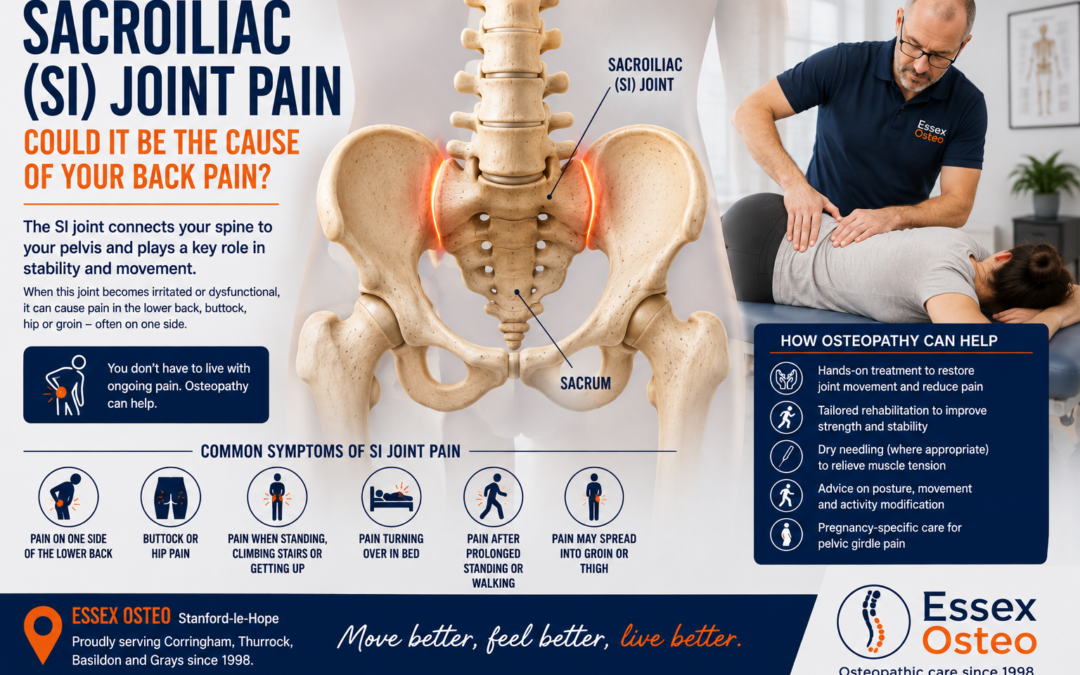
Pain in the lower back isn’t always caused by a disc problem or sciatica. In some cases, the source of pain is the sacroiliac (SI) joint—the joint that connects your spine to your pelvis.
Sacroiliac joint pain is a common but often overlooked cause of lower back and buttock pain. It can mimic other conditions, making a thorough assessment essential for an accurate diagnosis.
At Essex Osteo in Stanford-le-Hope, we regularly assess and treat patients with SI joint dysfunction using a combination of hands-on osteopathic treatment, rehabilitation and education to help reduce pain and improve movement.
What Is the Sacroiliac Joint?
The sacroiliac joints are two strong joints located at the base of the spine where the sacrum meets the ilium (pelvic bones).
Although these joints move only a few degrees, they play a vital role in:
- Transferring forces between the upper and lower body
- Absorbing shock during walking and running
- Providing stability to the pelvis
- Supporting balance and movement
When the SI joint becomes irritated or inflamed, it can become a significant source of pain.
What Causes SI Joint Pain?
SI joint pain can develop for several reasons, including:
Mechanical Strain
Lifting, twisting, awkward movements or prolonged standing can overload the joint.
Pregnancy
Hormonal changes and increased pelvic mobility place additional stress on the SI joints, making pregnancy-related pelvic girdle pain relatively common.
Trauma
Falls onto the buttocks, road traffic accidents or sporting injuries may irritate the joint.
Arthritis
Degenerative or inflammatory arthritis can affect the SI joints.
Leg Length Differences or Altered Biomechanics
Changes in walking pattern, hip problems or previous lower limb injuries may increase stress on the pelvis.
Common Symptoms
SI joint pain often presents as:
- Pain on one side of the lower back
- Buttock pain
- Pain over the dimples at the base of the spine
- Pain when standing from sitting
- Pain climbing stairs
- Discomfort rolling over in bed
- Pain after prolonged standing
- Difficulty walking long distances
Pain may occasionally spread into the thigh or groin but usually does not extend below the knee.
Is SI Joint Pain the Same as Sciatica?
No.
Although SI joint pain can mimic sciatica, there are important differences.
| SI Joint Pain | Sciatica |
|---|---|
| Usually one-sided | May affect one or both legs |
| Buttock and lower back pain | Pain often travels below the knee |
| Rarely causes numbness | Numbness or tingling is common |
| No significant muscle weakness | Weakness may occur |
| Often painful turning in bed | Often aggravated by nerve tension |
Because symptoms can overlap, a thorough assessment is essential.
How Is SI Joint Pain Diagnosed?
There is no single test that confirms SI joint dysfunction.
Diagnosis is based on:
- Detailed medical history
- Movement assessment
- Palpation
- A combination of SI joint provocation tests
- Examination of the lumbar spine and hips
- Excluding other causes of back pain
Research suggests that using multiple provocation tests together improves diagnostic accuracy.
Do I Need an MRI?
Usually not.
MRI scans are mainly used to exclude other causes of back pain or to investigate inflammatory conditions such as ankylosing spondylitis.
Most mechanical SI joint problems can be diagnosed clinically.
How Can Osteopathy Help?
Treatment is tailored to your individual assessment findings.
Your treatment may include:
Hands-on Osteopathic Treatment
Gentle mobilisation techniques to improve movement in the pelvis and lower back.
Soft Tissue Therapy
Reducing muscle tension around the hips, buttocks and lower back.
Exercise Rehabilitation
Your personalised programme may include:
- Core strengthening
- Glute strengthening
- Hip stability exercises
- Balance training
- Walking progression
- Functional movement retraining
Dry Needling
Where appropriate, dry needling may help reduce muscular pain and improve movement.
Pregnancy Advice
For pregnancy-related pelvic girdle pain, treatment is adapted to each stage of pregnancy and may include advice on movement, sleeping positions and activity modification.
Can SI Joint Pain Be Prevented?
You can reduce your risk by:
- Keeping your core muscles strong
- Maintaining good hip mobility
- Avoiding prolonged standing in one position
- Using good lifting technique
- Remaining physically active
- Managing training loads during sport
When Should You Seek Medical Advice?
Arrange an assessment if:
- Pain lasts longer than two weeks
- Symptoms keep returning
- Pain is affecting work or sleep
- You’re unsure whether the pain is coming from your back, hip or pelvis
Seek urgent medical attention if you develop:
- Loss of bladder or bowel control
- Saddle numbness
- Progressive leg weakness
- Fever or unexplained weight loss
These symptoms may indicate a more serious condition requiring immediate assessment.
Living Well with SI Joint Pain
Most people recover well with conservative treatment.
The key is:
- Staying active
- Completing a personalised rehabilitation programme
- Improving strength and stability
- Addressing contributing factors early
With the right approach, many people return to work, sport and everyday activities without ongoing problems.
Why Choose Essex Osteo?
Since 1998, Essex Osteo has been helping patients across Stanford-le-Hope, Corringham, Thurrock, Basildon and Grays recover from lower back and pelvic pain.
Ben Calvert-Painter is a Registered Osteopath, NHS MSK First Contact Practitioner, clinical educator and international lecturer with over 25 years of experience diagnosing and treating musculoskeletal conditions.
Every patient receives:
- A comprehensive assessment
- Individual diagnosis
- Evidence-informed treatment
- Personalised rehabilitation programme
- Practical self-management advice
Our goal is to help you move better, reduce pain and stay active.
Frequently Asked Questions
Where is SI joint pain usually felt?
Most people feel pain over one side of the lower back or buttock, often close to the dimples at the base of the spine. Pain may spread into the groin or upper thigh but usually doesn’t travel below the knee.
Can osteopathy help SI joint pain?
Yes. Many patients benefit from osteopathic treatment combined with rehabilitation exercises, education and practical advice to improve movement and reduce pain.
Is walking good for SI joint pain?
For many people, gentle walking is beneficial. The amount should be increased gradually depending on your symptoms and recovery.
Can pregnancy cause SI joint pain?
Yes. Hormonal changes and increased movement around the pelvis can contribute to SI joint pain or pelvic girdle pain during pregnancy.
Do I need an injection?
Most people improve with conservative treatment. Injections are generally reserved for persistent cases or when additional diagnostic confirmation is needed.
Book an Assessment
If you’re experiencing persistent lower back, buttock or pelvic pain, Essex Osteo can help.
We provide expert assessment, evidence-based osteopathic treatment and personalised rehabilitation to help you recover, move confidently and get back to the activities you enjoy.
Essex Osteo – Trusted osteopathic care in Stanford-le-Hope since 1998.
References
- National Institute for Health and Care Excellence (NICE). Low Back Pain and Sciatica in Over 16s: Assessment and Management (NG59).
- Laslett M. Evidence-Based Diagnosis and Treatment of the Painful Sacroiliac Joint.
- International Association for the Study of Pain (IASP). Sacroiliac Joint Pain.
- Vleeming A, et al. European Guidelines for the Diagnosis and Treatment of Pelvic Girdle Pain.
SEO keywords naturally targeted
- Sacroiliac joint pain
- SI joint dysfunction
- SI joint pain treatment
- Buttock pain
- Pelvic pain
- Pregnancy pelvic girdle pain
- Osteopath for SI joint pain
- Lower back and buttock pain
- SI joint treatment Stanford-le-Hope
- Osteopathy Essex