
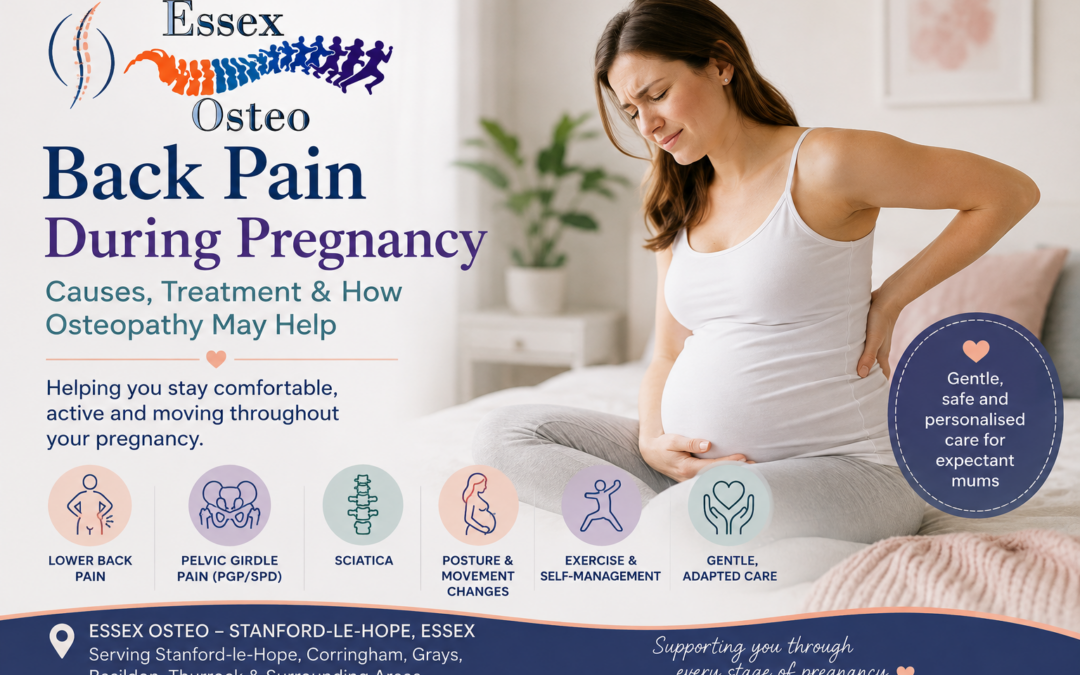
The next article in the pregnancy SEO cluster is “Back Pain During Pregnancy: Causes, Treatment & How Osteopathy May Help.” This is an important one because it targets both the broader pregnancy-back-pain searches and local searches for a pregnancy osteopath.
Back Pain During Pregnancy: Causes, Treatment & How Osteopathy May Help
A Guide for Expectant Mothers from Essex Osteo, Stanford-le-Hope
Back pain during pregnancy is extremely common. As your baby grows, your body continually adapts to changes in weight, posture, hormones and movement. For some women this causes only occasional stiffness, while for others lower back pain can make sleeping, walking, working and everyday activities increasingly uncomfortable.
If you’re experiencing back pain during pregnancy, you may be wondering what’s causing it, whether it’s normal and what you can safely do about it.
At Essex Osteo in Stanford-le-Hope, we provide individual assessment and osteopathic care for expectant mothers experiencing pregnancy-related musculoskeletal problems.
This guide explains why back pain can occur during pregnancy, what you can do to manage it and when your symptoms should be assessed by a healthcare professional.
Is Back Pain Normal During Pregnancy?
Back pain is one of the most frequently reported musculoskeletal complaints during pregnancy.
It can occur at almost any stage but often becomes more noticeable as pregnancy progresses and the physical demands on the body increase.
Common symptoms include:
- Aching across the lower back
- Pain around the pelvis or buttocks
- Stiffness after sitting
- Pain when standing for prolonged periods
- Discomfort when turning in bed
- Pain when walking
- Muscle tightness
- Difficulty finding a comfortable sleeping position
Although back pain is common during pregnancy, that doesn’t mean you simply have to put up with it.
Understanding why it is happening is an important first step towards managing it.
What Causes Back Pain During Pregnancy?
There is rarely one single cause. Pregnancy creates several changes that can affect how your spine, pelvis and muscles function.
1. Your Centre of Gravity Changes
As your bump grows, your centre of gravity gradually moves forwards.
Your body naturally compensates by changing the way you stand and move. This can increase the workload placed on the muscles around your:
- Lower back
- Pelvis
- Hips
- Upper back
These muscles may consequently become tired or uncomfortable.
2. Hormonal Changes
During pregnancy, hormonal changes help prepare your body for childbirth.
One hormone frequently discussed is relaxin, which contributes to changes in connective tissues and ligament behaviour.
These changes are normal, but they occur alongside increasing physical demands on the pelvis and spine.
3. Increased Physical Load
As pregnancy progresses, your body is supporting additional weight.
The muscles surrounding your spine, abdomen, pelvis and hips have to adapt to these changing demands.
This can contribute to fatigue and discomfort, particularly after prolonged standing, walking or sitting.
4. Changes in Movement
You may notice that you begin walking, standing, sleeping or getting out of a chair differently.
These adaptations aren’t necessarily harmful, but some movement patterns may become uncomfortable.
5. Previous Back Problems
If you experienced back pain before becoming pregnant, you may be more likely to experience symptoms during pregnancy.
This makes maintaining movement, strength and activity particularly important.
Lower Back Pain or Pelvic Girdle Pain?
Not all pregnancy-related back pain comes directly from the lumbar spine.
Some women actually have Pregnancy-Related Pelvic Girdle Pain (PGP).
PGP may cause pain around:
- The back of the pelvis
- Sacroiliac joints
- Buttocks
- Groin
- Pubic region
- Inner thighs
Activities such as turning in bed, climbing stairs, getting out of a car or standing on one leg may aggravate symptoms.
An assessment can help establish whether your symptoms are predominantly coming from your lower back, pelvic girdle or another structure.
What About Sciatica During Pregnancy?
Leg pain is sometimes described as “sciatica”, but not every pain travelling into the buttock or leg is caused by irritation of the sciatic nerve.
True neurological symptoms may include:
- Shooting leg pain
- Tingling
- Pins and needles
- Numbness
- Weakness
If these symptoms occur, an appropriate neurological assessment is important.
We’ll explore this in greater detail in our dedicated guide to Sciatica During Pregnancy.
Can Osteopathy Help Back Pain During Pregnancy?
Osteopathic care may form part of the management of pregnancy-related musculoskeletal back pain.
At Essex Osteo, treatment isn’t simply about treating the area that hurts.
We consider factors such as:
- Spinal movement
- Pelvic movement
- Hip mobility
- Muscle tension
- Posture
- Everyday activities
- Previous injuries
- Exercise and activity levels
Treatment is then adapted specifically to you and your stage of pregnancy.
Depending on your assessment, this may include:
- Gentle joint mobilisation
- Soft tissue techniques
- Stretching
- Movement advice
- Exercise recommendations
- Postural advice
- Self-management strategies
The aim is to help improve comfort and movement while allowing you to remain as active as possible.
Is Osteopathy Safe During Pregnancy?
For many women, osteopathic treatment can be provided safely during pregnancy following an appropriate assessment.
Treatment techniques and positioning are modified according to your stage of pregnancy, medical history and comfort.
As your pregnancy progresses, for example, treatment may be performed while you’re comfortably positioned on your side rather than lying flat.
If you’d like more information, read our guide:
Is Osteopathy Safe During Pregnancy?
What Can I Do at Home for Pregnancy Back Pain?
There are several simple strategies that may help.
Keep Moving
Unless your maternity team has advised otherwise, staying physically active is generally beneficial during pregnancy.
Regular walking and appropriate pregnancy exercise can help maintain mobility and strength.
Avoid Staying in One Position Too Long
If you work at a desk, try changing position regularly.
Standing or walking for a few minutes can often help reduce stiffness.
Consider Your Sleeping Position
As your pregnancy progresses, pillows can provide additional support.
A pillow between your knees can help some women feel more comfortable when sleeping on their side.
Keep Exercising
Appropriate strengthening exercises may help maintain the capacity of the muscles supporting your back and pelvis.
Rather than assuming that pregnancy makes your back “weak” or “unstable”, exercise should generally focus on maintaining comfortable movement and strength.
Think About Lifting
As your bump grows, everyday tasks become more demanding.
When lifting, particularly if you already have young children, try to keep the load close to your body and avoid repeatedly twisting while carrying something heavy.
Should I Rest If My Back Hurts?
Complete rest is rarely the best solution for uncomplicated musculoskeletal back pain.
While temporarily modifying activities that aggravate your symptoms can be sensible, prolonged inactivity can contribute to:
- Increased stiffness
- Reduced strength
- Reduced confidence with movement
Your osteopath can help you identify activities you can continue safely and suggest appropriate modifications.
When Is Pregnancy Back Pain More Serious?
Most pregnancy-related back pain is musculoskeletal, but some symptoms require medical assessment.
Contact your maternity team, GP or urgent medical services as appropriate if back pain is associated with symptoms such as:
- Vaginal bleeding
- Fever or feeling significantly unwell
- Pain or burning when urinating
- Regular abdominal tightening or contractions
- Fluid loss
- Significant abdominal pain
- Reduced fetal movements
- New significant weakness or numbness
- Loss of bladder or bowel control
- Numbness around the genital or saddle region
If you’re uncertain about symptoms during pregnancy, seeking appropriate medical advice is always sensible.
What Happens at a Pregnancy Osteopathy Appointment?
Your first appointment at Essex Osteo begins with a detailed consultation.
We’ll discuss your:
- Pregnancy
- Current symptoms
- Previous pregnancies
- Medical history
- Previous injuries
- Work and daily activities
- Exercise
- Treatment goals
A physical examination may then assess areas such as your spine, pelvis, hips and surrounding muscles.
We’ll explain what we find and discuss whether osteopathic treatment is appropriate.
Treatment is always adapted to your comfort and preferences.
Can I Have Osteopathy Throughout Pregnancy?
Many women can receive osteopathic care at different stages of pregnancy.
There isn’t a standard treatment programme that every pregnant woman needs.
Some people attend because they have a specific problem such as back pain or pelvic girdle pain, while others may seek advice about maintaining comfortable movement as pregnancy progresses.
The frequency and number of appointments should therefore be based on your individual needs rather than a predetermined package.
Frequently Asked Questions About Pregnancy Back Pain
Why does my lower back hurt more as my pregnancy progresses?
As your baby grows, changes in body weight, posture, movement and muscular workload can contribute to increasing discomfort around the lower back and pelvis.
Can pregnancy back pain affect my baby?
Ordinary musculoskeletal back pain does not usually mean that there is a problem with your baby. However, unusual or severe symptoms, particularly when accompanied by other pregnancy-related warning signs, should be discussed with your maternity team.
Can osteopathy cure pregnancy back pain?
It is better to think in terms of managing symptoms and improving function rather than promising a cure. Osteopathic treatment, exercise, activity modification and self-management may help some women manage pregnancy-related back pain.
Can I exercise if I have pregnancy back pain?
Often, yes. Exercise may actually be an important part of managing symptoms. The type and intensity should be appropriate for your pregnancy, symptoms and medical circumstances.
Do I need to see my GP before seeing an osteopath?
A GP referral isn’t normally required to see a registered osteopath. If your symptoms suggest that medical or maternity assessment is needed, we will advise you accordingly.
How many osteopathy appointments will I need?
There is no set number. This depends on the nature of your symptoms, how long you’ve had them and how you respond to treatment and self-management.
Pregnancy Osteopathy in Stanford-le-Hope
If pregnancy back pain is making it difficult to sleep, walk, work or simply enjoy your pregnancy, an assessment may help identify what’s contributing to your symptoms and what you can do about it.
At Essex Osteo, we’ve been providing osteopathic care since 1998 and offer individual, evidence-informed treatment from our clinic in Stanford-le-Hope, Essex.
We welcome expectant mothers from Stanford-le-Hope, Corringham, Grays, Thurrock, Basildon, Tilbury, South Ockendon and surrounding areas.
If you’re searching for a pregnancy osteopath near me, osteopathy for pregnancy back pain in Stanford-le-Hope, or help with back or pelvic pain during pregnancy in Thurrock, contact Essex Osteo to arrange an appointment.
Essex Osteo – helping you stay comfortable, active and moving throughout your pregnancy.