
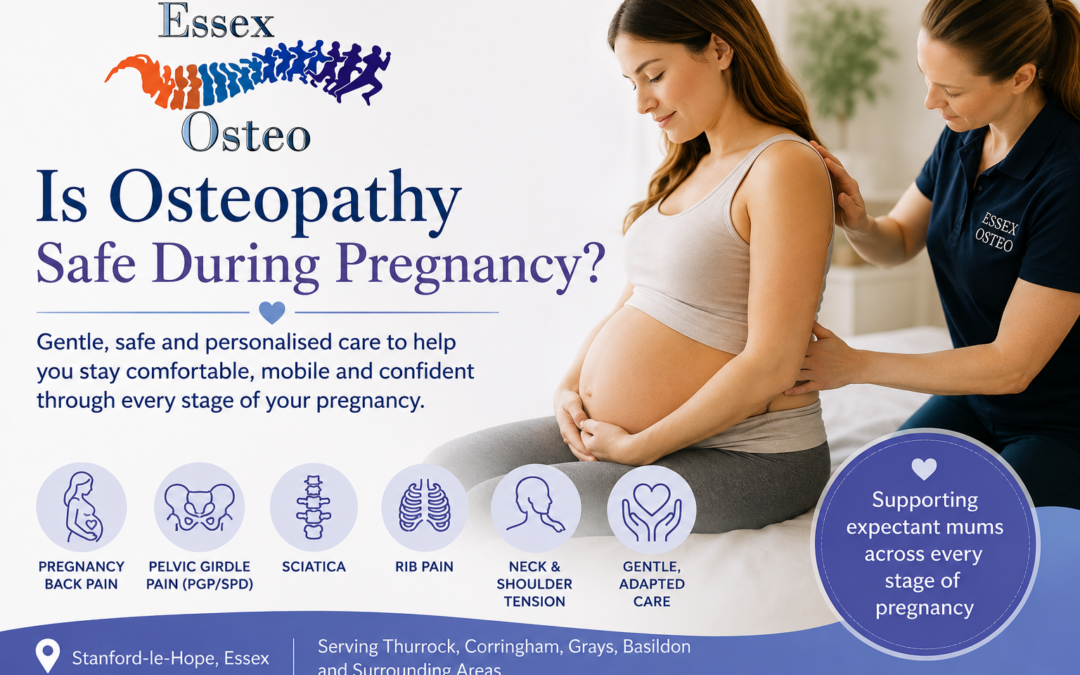
Is Osteopathy Safe During Pregnancy?
Everything Expectant Mothers Need to Know
Expert Advice from Essex Osteo, Stanford-le-Hope
Pregnancy is an exciting and life-changing experience, but it also brings significant physical changes. As your baby grows, your muscles, joints and ligaments adapt to support your changing body. While these changes are completely normal, they can sometimes lead to back pain, pelvic discomfort, neck pain and reduced mobility.
One of the most common questions we hear at Essex Osteo is:
“Is osteopathy safe during pregnancy?”
The short answer is yes—for most women, osteopathy is considered a safe and appropriate treatment for pregnancy-related musculoskeletal pain when provided by a qualified, registered osteopath following an individual assessment.
In this guide, we’ll explain how osteopathy is adapted during pregnancy, what conditions it may help with, when treatment may not be appropriate, and what you can expect during your appointment.
Can You Have Osteopathy While Pregnant?
Yes.
Osteopathy is commonly used throughout pregnancy to help manage musculoskeletal discomfort associated with the normal physical changes that occur as your pregnancy progresses.
Treatment is always adapted to:
- Your stage of pregnancy
- Your medical history
- Your symptoms
- Your comfort
- Advice from your maternity team where appropriate
At Essex Osteo in Stanford-le-Hope, every appointment begins with a detailed assessment to ensure treatment is suitable for you.
Why Does Pregnancy Cause Aches and Pains?
Your body undergoes remarkable changes to support your growing baby.
These include:
Hormonal Changes
Hormones such as relaxin increase ligament flexibility, helping prepare the pelvis for childbirth. While essential, this can sometimes reduce joint stability and contribute to discomfort.
Changes in Posture
As your bump grows, your centre of gravity shifts forwards.
This often results in:
- Increased arching of the lower back
- Changes in walking pattern
- Greater strain on the hips
- Muscle fatigue
- Shoulder and neck tension
Increased Joint Loading
Your spine, pelvis and lower limbs work much harder during pregnancy.
Combined with weight gain, this may contribute to pain and stiffness.
Pregnancy Conditions Osteopaths Commonly Assess
Many women seek osteopathic care for pregnancy-related musculoskeletal symptoms, including:
Pregnancy Back Pain
One of the most common complaints during pregnancy.
Symptoms may include:
- Lower back pain
- Mid-back discomfort
- Muscle tightness
- Difficulty walking
- Pain standing for long periods
Pelvic Girdle Pain (PGP)
Previously known as Symphysis Pubis Dysfunction (SPD).
Symptoms often include:
- Pain around the pelvis
- Difficulty turning in bed
- Pain climbing stairs
- Clicking around the pelvis
- Pain when standing on one leg
Sciatica
Some women develop irritation of the sciatic nerve during pregnancy.
Symptoms may include:
- Pain down the leg
- Tingling
- Burning sensations
- Numbness
Assessment helps identify the source of symptoms before treatment begins.
Rib Pain
As the rib cage expands during pregnancy, some women develop:
- Rib pain
- Mid-back pain
- Difficulty taking deep breaths
- Pain when sitting
Neck and Shoulder Pain
Changes in posture often contribute to:
- Neck pain
- Shoulder tension
- Tension headaches
How Is Osteopathy Adapted During Pregnancy?
Pregnancy treatment differs from routine osteopathic care.
Your osteopath will modify techniques according to:
- Stage of pregnancy
- Comfort
- Mobility
- Medical history
Treatment may include:
- Gentle joint mobilisation
- Soft tissue massage
- Stretching techniques
- Muscle relaxation
- Postural advice
- Exercise guidance
- Breathing advice
- Movement education
Treatment positions are also adapted. As pregnancy progresses, many women are treated comfortably lying on their side or in supported seated positions.
Does Osteopathy Involve “Cracking” the Spine During Pregnancy?
This is another common question.
While osteopaths are trained in spinal manipulation, high-velocity thrust techniques are not routinely used during pregnancy and are only considered if clinically appropriate after a thorough assessment. In many cases, gentle mobilisation and soft tissue techniques provide effective symptom relief without the need for manipulation.
Your treatment plan is always individualised, and if a particular technique is not appropriate or you would prefer not to have it, alternative approaches can be used.
When Might Osteopathy Not Be Appropriate?
Although osteopathy is suitable for many pregnant women, treatment may need to be delayed or modified in certain situations.
These may include:
- Unexplained vaginal bleeding
- Severe abdominal pain
- Suspected pre-eclampsia
- Reduced fetal movements
- Signs of preterm labour
- Fever or systemic illness
- Certain high-risk pregnancies
If your symptoms require urgent medical assessment, your osteopath will advise you to contact your midwife, GP or maternity unit immediately.
Osteopathy complements maternity care—it does not replace it.
What Happens During Your First Appointment?
Your first visit includes:
A Detailed Medical History
We’ll discuss:
- Stage of pregnancy
- Previous pregnancies
- Medical history
- Current symptoms
- Lifestyle
- Exercise
- Your goals
Physical Assessment
This may include assessment of:
- Posture
- Spine
- Pelvis
- Hips
- Rib movement
- Muscle tension
- Walking pattern
Individual Treatment
Treatment is tailored specifically to your needs and comfort.
Advice is often provided regarding:
- Sleeping positions
- Sitting posture
- Lifting
- Exercise
- Stretching
- Self-management
Can Osteopathy Help Prepare for Labour?
Many expectant mothers choose osteopathic treatment during the later stages of pregnancy to help maintain comfort and mobility.
Treatment may focus on:
- Improving pelvic movement
- Reducing muscle tension
- Encouraging comfortable movement
- Supporting posture
- Helping you remain active
It’s important to note that osteopathy does not induce labour.
Is There Evidence for Osteopathy During Pregnancy?
Research suggests that manual therapy, including osteopathic approaches, may help reduce pregnancy-related musculoskeletal pain and improve function for some women, particularly those with low back pain and pelvic girdle pain. However, responses vary between individuals, and more high-quality research is still needed.
Current clinical guidelines continue to recommend a combination of education, exercise, self-management and, where appropriate, hands-on treatment as part of a comprehensive approach to pregnancy-related musculoskeletal pain.
At Essex Osteo, we use an evidence-informed approach, combining clinical experience, current research and your individual preferences to guide care.
Why Choose Essex Osteo?
Choosing healthcare during pregnancy is an important decision.
At Essex Osteo, we offer:
- Registered Osteopath with over 25 years of clinical experience
- Established clinic in Stanford-le-Hope since 1998
- Evidence-informed treatment
- Gentle, pregnancy-adapted techniques
- Individual care plans
- Advice on posture, movement and rehabilitation
- Convenient location serving Stanford-le-Hope, Corringham, Grays, Basildon and Thurrock
Our aim is to help you stay as comfortable, mobile and confident as possible throughout your pregnancy.
Frequently Asked Questions
Is osteopathy safe in the first trimester?
For many women, yes. Every patient is assessed individually, and treatment is adapted to your stage of pregnancy and medical history.
Can osteopathy help pregnancy back pain?
Osteopathy may help improve movement, reduce muscular tension and support the management of pregnancy-related musculoskeletal pain. Outcomes vary between individuals.
Can I lie on my front during treatment?
No. Treatment positions are adapted as your pregnancy progresses to ensure you remain comfortable and well supported.
Does treatment hurt?
Treatment is usually gentle and designed around your comfort. Your osteopath will explain each technique before using it.
Do I need a referral?
No. You can book directly with Essex Osteo without a GP referral.
How many appointments will I need?
This depends on your symptoms, stage of pregnancy and treatment goals. Your osteopath will discuss an individual plan following assessment.
Supporting Expectant Mothers Across South Essex
If you’re looking for a pregnancy osteopath in Stanford-le-Hope, support with pregnancy back pain, pelvic girdle pain, sciatica during pregnancy or simply want to stay comfortable throughout your pregnancy, Essex Osteo is here to help.
We welcome expectant mothers from Stanford-le-Hope, Corringham, Grays, Basildon, Tilbury, South Ockendon and across Thurrock.
With over 25 years of experience, we provide safe, personalised, evidence-informed osteopathic care to help you move comfortably through every stage of pregnancy.
Book your appointment with Essex Osteo today and let us support you on your journey to motherhood.