
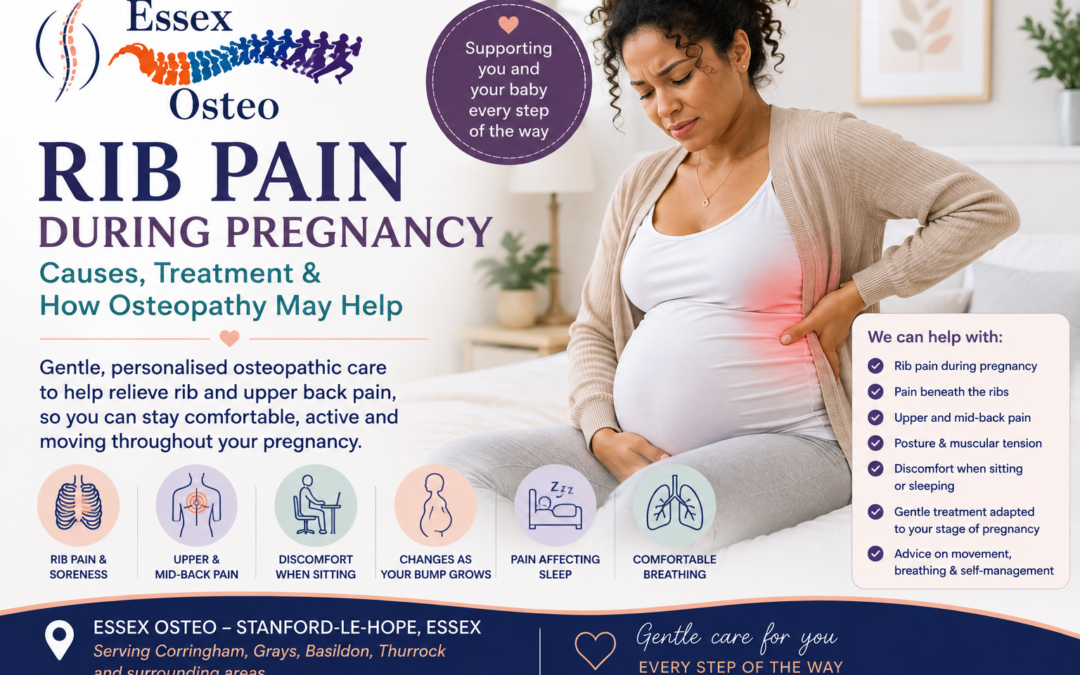
Rib Pain During Pregnancy: Causes, Treatment & How Osteopathy May Help
A Guide for Expectant Mothers from Essex Osteo, Stanford-le-Hope
Rib pain during pregnancy can range from a mild ache around the side of the chest to uncomfortable pain beneath the ribs that makes sitting, sleeping or taking a deep breath difficult.
As pregnancy progresses, your body undergoes significant changes. Your growing uterus, changing posture and adaptations in the way you breathe and move can all increase the demands placed on your ribs, thoracic spine and surrounding muscles.
For many women, rib discomfort has a straightforward musculoskeletal explanation. However, pain beneath the ribs during pregnancy can occasionally be associated with conditions requiring medical assessment, so knowing when to seek advice is important.
At Essex Osteo in Stanford-le-Hope, we assess and treat pregnancy-related musculoskeletal problems including back, pelvic, rib, neck and shoulder pain.
This guide explains why rib pain may develop during pregnancy, what you can do to manage it and how osteopathy may help.
Is Rib Pain Common During Pregnancy?
Rib and upper back discomfort can occur during pregnancy, particularly as your pregnancy progresses.
You may experience:
- Aching around the lower ribs
- Pain beneath the rib cage
- Discomfort around the middle or upper back
- Pain around one side of the chest
- Muscular tightness
- Discomfort when sitting
- Pain when twisting
- Discomfort when taking a deep breath
- Difficulty finding a comfortable sleeping position
Symptoms can occur on either side or across both sides of the rib cage.
Why Do My Ribs Hurt During Pregnancy?
There isn’t necessarily one single cause. Several normal pregnancy-related changes may contribute.
1. Your Rib Cage Changes During Pregnancy
Your body has to accommodate your growing baby while maintaining sufficient space for breathing.
The rib cage and surrounding tissues adapt as pregnancy progresses, and this can alter the mechanical demands on the joints and muscles of the upper body.
2. Your Growing Baby
Later in pregnancy, your growing uterus occupies considerably more space within the abdomen.
Some women notice increased pressure or discomfort around the lower ribs, particularly when sitting.
Your baby’s position may also temporarily make one side feel more uncomfortable than the other.
3. Changes in Posture
As your bump becomes larger, your centre of gravity changes.
Your upper body naturally adapts.
This can alter the workload on the:
- Thoracic spine
- Rib joints
- Shoulder muscles
- Neck muscles
- Muscles between the ribs
These adaptations are normal, but increased muscular demand may contribute to discomfort.
4. Changes in Breathing
Pregnancy affects the respiratory system as your body adapts to the increased demands of pregnancy.
The rib cage needs to move effectively during breathing.
If the muscles around the ribs and thoracic spine become tight or uncomfortable, deep breathing may sometimes feel restricted or sore.
However, significant or unexplained shortness of breath should not simply be assumed to be musculoskeletal and should be appropriately assessed.
5. Sitting for Long Periods
Many women find rib pain particularly noticeable when:
- Working at a desk
- Driving
- Sitting on a sofa
- Travelling
- Remaining in one position for prolonged periods
Sitting can reduce the available space between your rib cage and pelvis while increasing muscular fatigue around the back.
Changing position regularly can sometimes make a significant difference.
Rib Pain or Upper Back Pain?
The ribs attach to the thoracic spine, so symptoms around the ribs and upper back are often closely related.
Pain may be experienced:
- Between the shoulder blades
- Around the side of the chest
- Underneath the ribs
- Across the middle back
Assessment can help identify whether the discomfort appears to arise predominantly from the ribs, thoracic spine, muscles or another structure.
Can Osteopathy Help Rib Pain During Pregnancy?
Osteopathic care may form part of the management of musculoskeletal rib and upper back pain during pregnancy.
At Essex Osteo, we don’t simply focus on the painful rib.
Your assessment may consider:
- Thoracic spinal movement
- Rib movement
- Shoulder mobility
- Neck movement
- Muscle tension
- Breathing mechanics
- Posture
- Workstation setup
- Sleeping positions
- Everyday activities
Treatment is then adapted to your stage of pregnancy and individual presentation.
It may include:
- Gentle rib mobilisation
- Thoracic spinal mobilisation
- Soft tissue techniques
- Gentle stretching
- Shoulder and upper-back mobility work
- Breathing exercises
- Postural advice
- Exercise
- Self-management strategies
The aim is to improve comfortable movement and help you manage your symptoms.
Is Osteopathy Safe for Rib Pain During Pregnancy?
For many women with uncomplicated musculoskeletal symptoms, osteopathic treatment can be provided during pregnancy following an appropriate assessment.
Techniques and treatment positions are adapted to your:
- Stage of pregnancy
- Medical history
- Symptoms
- Comfort
- Individual preferences
As your pregnancy progresses, treatment can usually be performed comfortably while side-lying, sitting or using other supported positions.
You can read more in our guide: Is Osteopathy Safe During Pregnancy?
What Can I Do at Home for Pregnancy Rib Pain?
Several simple strategies may help.
Change Position Regularly
If sitting aggravates your ribs, avoid remaining in one position for long periods.
Regularly standing, walking and gently changing position can help reduce stiffness.
Support Your Upper Back
A supportive chair may be more comfortable than sitting deeply into a soft sofa.
Experiment with different positions rather than trying to maintain a supposedly “perfect” posture throughout the day.
Gentle Movement
Comfortable movement of your upper back, shoulders and rib cage can help maintain mobility.
Gentle rotation and breathing exercises may be useful, provided they do not aggravate your symptoms.
Consider Your Workstation
If you work at a desk, consider:
- Screen height
- Chair position
- Keyboard position
- How long you remain seated
Regular movement breaks are often more important than trying to maintain one rigid posture.
Sleeping Comfortably
Many women find side sleeping increasingly comfortable as pregnancy progresses.
Pillows can be used to support your:
- Bump
- Upper arm
- Back
- Knees
Finding a position that allows your upper body to relax may help reduce muscular tension.
Can I Stretch My Ribs During Pregnancy?
Gentle movement and stretching may feel helpful for some women.
However, exercises should remain comfortable and should not cause significant pain, dizziness, breathlessness or other concerning symptoms.
There isn’t one particular “best stretch” that every pregnant woman with rib pain needs.
An individual assessment can help determine which movements are appropriate for you.
Pain Under the Right Ribs During Pregnancy: When Should I Be Concerned?
This is particularly important.
Although many cases of rib pain are musculoskeletal, pain underneath the ribs—particularly the right ribs—can occasionally be associated with pregnancy complications such as pre-eclampsia.
Seek advice from your maternity team promptly if upper abdominal or rib pain is severe, persistent or accompanied by symptoms such as:
- Severe headache
- Visual disturbances
- Sudden swelling of the face, hands or feet
- Feeling significantly unwell
- Nausea or vomiting later in pregnancy
- High blood pressure, if known
Do not assume persistent pain beneath the right ribs is simply a tight muscle or something that needs manual treatment.
Other Symptoms That Need Medical Assessment
Contact your maternity team or appropriate medical service if rib, chest or upper-back pain occurs alongside:
- Significant shortness of breath
- Chest pain
- Fainting or severe dizziness
- Fever
- Coughing up blood
- Significant abdominal pain
- Vaginal bleeding
- Reduced fetal movements
- Feeling acutely unwell
Sudden chest pain or significant difficulty breathing requires urgent medical attention.
Safety always comes before treatment.
What Happens at a Pregnancy Osteopathy Appointment?
Your first appointment at Essex Osteo starts with a detailed consultation.
We’ll discuss:
- Your pregnancy
- Location of your symptoms
- When the pain started
- Activities that aggravate or relieve it
- Previous back or rib problems
- Medical history
- Work
- Exercise
- Sleep
If your symptoms appear appropriate for musculoskeletal assessment, we may examine your:
- Thoracic spine
- Ribs
- Lower back
- Neck
- Shoulders
- Breathing movement
- Surrounding muscles
We’ll explain our findings and discuss an appropriate management plan.
If anything suggests that your symptoms require maternity or medical assessment, we’ll advise you accordingly.
Frequently Asked Questions About Rib Pain During Pregnancy
Why does it hurt underneath my ribs during pregnancy?
There are several possible causes. Musculoskeletal factors include changes in rib movement, muscular loading, posture and the reduced space available as your baby grows. However, persistent or severe upper abdominal or right-sided rib pain should be discussed with your maternity team.
Can my baby cause rib pain?
Your growing uterus and your baby’s position may contribute to pressure beneath the ribs, particularly later in pregnancy.
Can osteopathy help pregnancy rib pain?
If your pain is musculoskeletal, osteopathic treatment may form part of its management. Treatment may focus on rib and thoracic mobility, muscular tension, movement and self-management.
Is rib pain dangerous during pregnancy?
Most musculoskeletal rib discomfort is not dangerous. However, some medical and pregnancy-related conditions can also cause pain around the ribs or upper abdomen, which is why associated symptoms and your medical history are important.
Can osteopathy help me breathe more comfortably?
If muscular or rib stiffness is contributing to discomfort during breathing, treatment and movement exercises may help improve comfortable rib movement. Significant breathlessness, however, requires appropriate medical assessment.
Do I need a GP referral?
No. You can normally book directly with a registered osteopath. If your symptoms suggest medical assessment is required, we’ll advise you appropriately.
Pregnancy Rib Pain Treatment in Stanford-le-Hope
If rib pain, upper back pain or muscular tension during pregnancy is making sitting, sleeping, working or everyday activities uncomfortable, a musculoskeletal assessment may help establish what is contributing to your symptoms.
At Essex Osteo, we’ve been providing osteopathic care since 1998 from our clinic in Stanford-le-Hope, Essex.
We provide individual, evidence-informed osteopathic care for expectant mothers experiencing:
- Rib pain during pregnancy
- Upper and mid-back pain
- Pregnancy back pain
- Pelvic girdle pain (PGP/SPD)
- Pregnancy-related sciatica
- Neck and shoulder tension
- Muscular aches and stiffness
We welcome expectant mothers from Stanford-le-Hope, Corringham, Grays, Basildon, Thurrock, Tilbury, South Ockendon and surrounding areas of Essex.
If you’re searching for a pregnancy osteopath near me, osteopathy for rib pain in Stanford-le-Hope, or help with pregnancy back and rib pain in Thurrock or Essex, contact Essex Osteo to arrange an assessment.
Essex Osteo – helping you stay comfortable, active and moving throughout your pregnancy.
Continue Reading
This article forms part of our Complete Guide to Pregnancy & Baby Osteopathy series. Related articles include:
- The Complete Guide to Pregnancy & Baby Osteopathy
- Is Osteopathy Safe During Pregnancy?
- Back Pain During Pregnancy
- Pelvic Girdle Pain (PGP/SPD) During Pregnancy
- Sciatica During Pregnancy
- Preparing Your Body for Labour
- Postnatal Osteopathy: Recovery After Birth
Next in the series: Preparing Your Body for Labour – Movement, Mobility & How Osteopathy May Support You.