
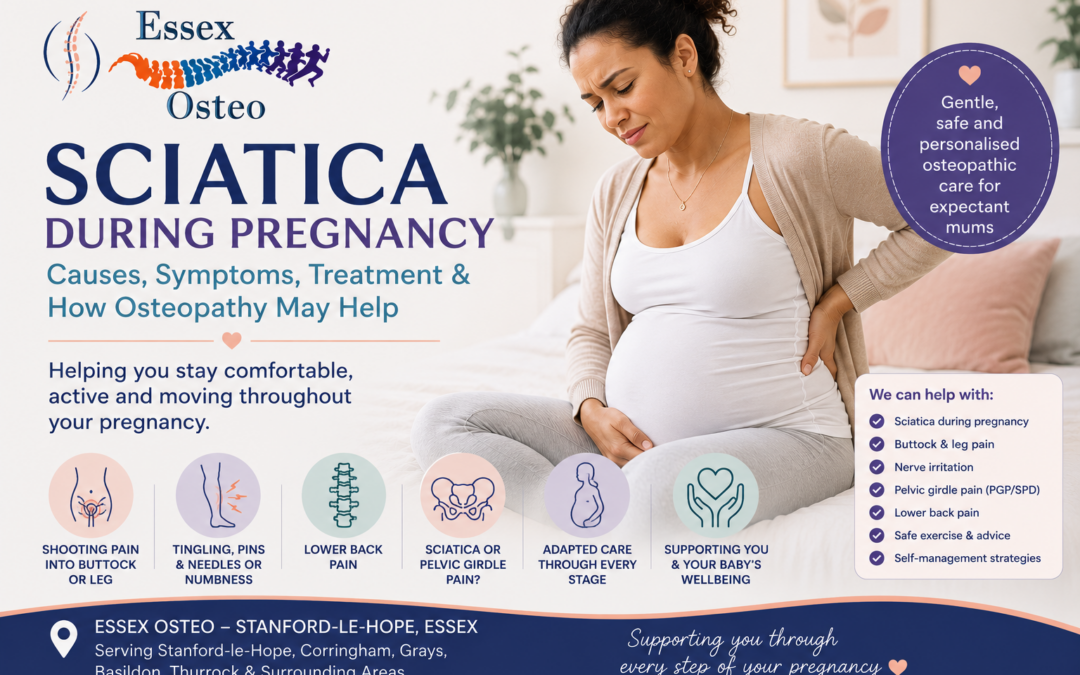
Sciatica During Pregnancy: Causes, Symptoms, Treatment & How Osteopathy May Help
A Guide for Expectant Mothers from Essex Osteo, Stanford-le-Hope
A shooting pain travelling from your lower back or buttock into your leg can be particularly worrying when you’re pregnant. You may have been told that you have sciatica, or perhaps you’ve searched online for “sciatica during pregnancy” because you’re trying to understand what’s causing your symptoms.
Although back, buttock and leg pain can occur during pregnancy, not every pain travelling into the leg is true sciatica. Pregnancy-related pelvic girdle pain, muscular pain and referred pain from the lower back can sometimes produce similar symptoms.
At Essex Osteo in Stanford-le-Hope, we assess pregnancy-related back, pelvic and leg pain to help identify what may be causing your symptoms and determine the most appropriate treatment or referral.
In this guide, we’ll explain what sciatica is, why it can occur during pregnancy, how to recognise the symptoms, what you can safely do to manage it and how osteopathic treatment may help.
What Is Sciatica?
Sciatica describes symptoms associated with irritation or compression of the sciatic nerve or the nerve roots that contribute to it.
The sciatic nerve is the largest nerve in the body. It originates from nerve roots in the lower spine and travels through the buttock and down the back of the leg.
When these nerves become irritated, symptoms may travel away from the lower back and into the leg.
Typical symptoms can include:
- Shooting or electric-like leg pain
- Burning pain
- Tingling
- Pins and needles
- Numbness
- Pain travelling below the knee
- Occasionally weakness in the leg or foot
Symptoms may occur with or without significant lower back pain.
Is Sciatica Common During Pregnancy?
Lower back and pelvic pain are common during pregnancy, but true sciatica is less common than many people assume.
Pain in the buttock or thigh is frequently labelled “sciatica” even when the sciatic nerve itself may not be responsible.
Other possible causes of pregnancy-related buttock or leg pain include:
- Pelvic girdle pain (PGP)
- Referred pain from the lower back
- Muscular pain
- Hip-related pain
- Changes in movement and loading
This is why assessment is important rather than assuming that every pain travelling into the leg is sciatica.
What Causes Sciatica During Pregnancy?
Pregnancy itself does not automatically cause sciatica.
However, several factors may contribute to lower back and leg symptoms.
Changes in Spinal Loading
As your baby grows, your body adapts to increasing physical demands.
Changes in body weight, posture and movement can alter the loads placed through your lower back and surrounding muscles.
For some women, this may aggravate a previously sensitive area.
Previous Back Problems
If you’ve previously experienced:
- Sciatica
- Disc problems
- Lower back pain
- Nerve irritation
you may experience a recurrence during pregnancy.
However, having had sciatica previously doesn’t mean that symptoms will necessarily return.
Changes in Movement
As pregnancy progresses, you may naturally change how you:
- Walk
- Stand
- Sit
- Sleep
- Bend
- Lift
These adaptations are normal, but certain positions or movements may aggravate an already sensitive lower back or nerve.
Does the Baby Press on the Sciatic Nerve?
You’ll often hear pregnancy sciatica explained as “the baby pressing on the sciatic nerve.”
While pressure within the pelvis may occasionally contribute to symptoms later in pregnancy, this explanation is often too simplistic.
The sciatic nerve and its nerve roots can become symptomatic for several reasons, and an assessment can help determine whether your symptoms are genuinely neurological or more likely to be referred musculoskeletal pain.
What Does Sciatica During Pregnancy Feel Like?
True sciatic symptoms typically follow a recognisable pattern.
You may experience:
Shooting Pain
Pain may travel from the buttock down the back or side of the leg.
Tingling or Pins and Needles
You may notice altered sensation in part of the leg or foot.
Numbness
Some areas of skin may feel less sensitive than usual.
Burning or Electric Pain
Nerve pain is sometimes described as burning, sharp or like an electric shock.
Weakness
More significant nerve irritation can occasionally cause weakness in particular muscles.
New or progressive weakness should always be appropriately assessed.
Sciatica or Pelvic Girdle Pain?
The two can sometimes feel similar.
Pelvic Girdle Pain (PGP) commonly produces pain around the:
- Buttocks
- Sacroiliac region
- Pubic bone
- Groin
- Hips
- Upper thighs
PGP may be particularly noticeable when:
- Turning in bed
- Climbing stairs
- Getting out of a car
- Walking
- Standing on one leg
Sciatica is more likely to include neurological symptoms such as tingling, numbness or pain following a nerve distribution into the leg.
An examination can help distinguish between them.
Can Osteopathy Help Sciatica During Pregnancy?
Osteopathic treatment may form part of the management of some cases of pregnancy-related lower back and leg pain.
The first step is establishing what appears to be causing your symptoms.
At Essex Osteo, assessment may include examination of your:
- Lower back
- Pelvis
- Hips
- Leg movement
- Muscle strength
- Reflexes
- Sensation
- Nerve function
If your symptoms appear suitable for conservative management, treatment may include:
- Gentle spinal mobilisation
- Soft tissue techniques
- Hip and pelvic mobility work
- Movement advice
- Exercise
- Positioning advice
- Activity modification
- Self-management strategies
Treatment is adapted to your stage of pregnancy and comfort.
Is Osteopathy Safe for Sciatica During Pregnancy?
For many women with uncomplicated musculoskeletal symptoms, osteopathic treatment can be provided during pregnancy following an appropriate assessment.
Treatment positions and techniques are modified as your pregnancy progresses.
You may, for example, be treated comfortably:
- Lying on your side
- Sitting
- In another supported position
Your comfort and safety remain central throughout the appointment.
Read our related guide: Is Osteopathy Safe During Pregnancy?
What Can I Do at Home for Pregnancy Sciatica?
The best approach depends on what is causing your symptoms, but several general strategies may help.
Keep Moving
Unless you’ve been medically advised otherwise, complete bed rest is generally not recommended for uncomplicated back pain or sciatica.
Regular comfortable movement may help reduce stiffness and maintain confidence.
Change Position Regularly
Long periods sitting or standing may aggravate symptoms.
Try alternating positions regularly rather than searching for one supposedly “perfect” posture.
Find Comfortable Sleeping Positions
Side lying is often comfortable later in pregnancy.
Using pillows to support your abdomen or between your knees may help reduce discomfort.
Continue Appropriate Exercise
Exercise can often be continued and may be an important part of managing back and leg symptoms.
Exercises should be selected according to your individual presentation rather than using a generic “sciatica exercise” programme.
Avoid Fear of Movement
Pain doesn’t necessarily mean that movement is causing damage.
If a particular activity aggravates your symptoms, it may need to be temporarily modified, but avoiding all movement can contribute to stiffness and reduced confidence.
Should I Stretch My Sciatic Nerve?
Not necessarily.
Aggressive stretching isn’t always helpful when a nerve is irritated and can sometimes increase symptoms.
What feels like tight hamstrings may actually represent neural sensitivity.
This is another reason why an individual assessment can be useful before repeatedly stretching a painful leg.
When Is Sciatica During Pregnancy More Serious?
Most pregnancy-related back and leg pain does not indicate serious disease, but certain symptoms require urgent medical assessment.
Seek urgent medical attention if you develop:
- New loss of bladder control
- New loss of bowel control
- Difficulty passing urine
- Numbness around the genitals, inner thighs or saddle region
- Significant or rapidly worsening weakness in one or both legs
- Severe neurological symptoms affecting both legs
These symptoms can indicate cauda equina syndrome, a rare but serious spinal condition requiring urgent assessment.
You should also contact your maternity team if back or leg pain occurs alongside pregnancy-related warning signs such as:
- Vaginal bleeding
- Fluid loss
- Regular contractions
- Significant abdominal pain
- Fever or feeling systemically unwell
- Reduced fetal movements
Don’t assume that every new symptom during pregnancy is simply musculoskeletal.
Will Sciatica Go Away After Pregnancy?
Many pregnancy-associated musculoskeletal symptoms improve after birth as physical demands and movement patterns change.
However, there is no guarantee that sciatica will disappear immediately following delivery, particularly if you had symptoms before pregnancy.
Persistent symptoms can usually be reassessed after birth, with rehabilitation progressed according to your recovery.
What Happens at Your First Appointment at Essex Osteo?
Your appointment starts with a detailed discussion about:
- Your pregnancy
- Current symptoms
- When they started
- Previous episodes of back pain or sciatica
- Medical history
- Previous pregnancies
- Work
- Exercise
- Activities that improve or aggravate your symptoms
If appropriate, we’ll then perform a physical and neurological assessment.
We’ll explain what we think may be causing your symptoms and whether osteopathic treatment is appropriate.
If we identify symptoms requiring medical investigation, we’ll advise you about appropriate referral rather than continuing treatment.
Frequently Asked Questions About Sciatica During Pregnancy
Can pregnancy cause sciatica?
Pregnancy can be associated with back and leg symptoms, but not all pregnancy-related leg pain is true sciatica. Assessment can help determine whether the sciatic nerve or nerve roots are likely to be involved.
Can the baby press on my sciatic nerve?
Direct pressure is possible in some circumstances, particularly later in pregnancy, but it is not the explanation for every case of pregnancy-related leg pain.
Can osteopathy cure sciatica?
It is better to discuss symptom management, function and recovery rather than promise a cure. Depending on the cause, osteopathic treatment, exercise and self-management may form part of conservative care.
Is walking good for pregnancy sciatica?
For many people, walking within comfortable limits is beneficial. If walking significantly increases your symptoms, the duration, pace or frequency may need to be modified.
Should I use heat?
Some people find gentle warmth helpful for muscular discomfort. During pregnancy, avoid excessive heat and seek advice from your maternity team if you’re uncertain about what is appropriate.
Do I need an MRI?
Most uncomplicated cases do not automatically require imaging. Imaging is considered when clinical findings suggest it would change management or when significant neurological or other concerning symptoms are present.
Do I need a GP referral to see an osteopath?
No. You can normally book directly with a registered osteopath. If your assessment suggests further medical investigation is required, we’ll advise you accordingly.
Pregnancy Sciatica Treatment in Stanford-le-Hope
If you’re experiencing shooting leg pain, tingling, numbness, buttock pain or lower back pain during pregnancy, don’t automatically assume that you simply have to tolerate it until your baby arrives.
An appropriate assessment can help establish whether your symptoms are likely to represent sciatica, pelvic girdle pain, referred back pain or another musculoskeletal problem.
At Essex Osteo, we’ve been providing osteopathic care since 1998 from our clinic in Stanford-le-Hope, Essex.
We provide individual, evidence-informed assessment and treatment for expectant mothers experiencing:
- Sciatica during pregnancy
- Pregnancy back pain
- Pelvic girdle pain (PGP/SPD)
- Buttock and hip pain
- Muscular aches and stiffness
- Pregnancy-related movement difficulties
We welcome patients from Stanford-le-Hope, Corringham, Grays, Thurrock, Basildon, Tilbury, South Ockendon and surrounding areas of Essex.
If you’re searching for a pregnancy osteopath near me, sciatica treatment in Stanford-le-Hope, or help with pregnancy back and leg pain in Thurrock or Essex, contact Essex Osteo to arrange an assessment.
Essex Osteo – helping you stay comfortable, confident and moving throughout your pregnancy.
Continue Reading
This article forms part of our Complete Guide to Pregnancy & Baby Osteopathy series.
Related guides include:
- The Complete Guide to Pregnancy & Baby Osteopathy
- Is Osteopathy Safe During Pregnancy?
- Back Pain During Pregnancy: Causes, Treatment & How Osteopathy May Help
- Pelvic Girdle Pain (PGP/SPD) During Pregnancy
- Rib Pain During Pregnancy
- Preparing Your Body for Labour
- Postnatal Osteopathy: Recovery After Birth
Next in the series: Rib Pain During Pregnancy – Why It Happens, What You Can Do & How Osteopathy May Help.